
Community Reinvestment Act
Bennington State Bank is pleased to provide information for public inspection under the Community Reinvestment Act (CRA). Interested parties can review the data provided and produce hard copy of documents as needed.
Assessment Areas
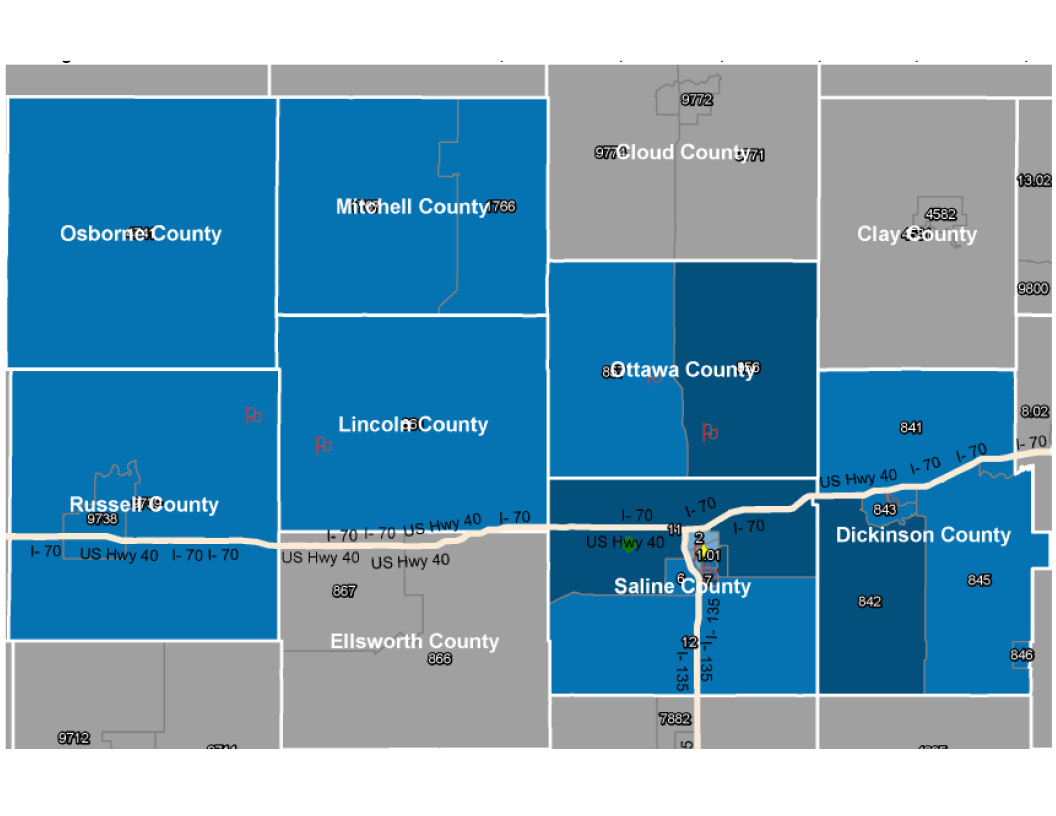
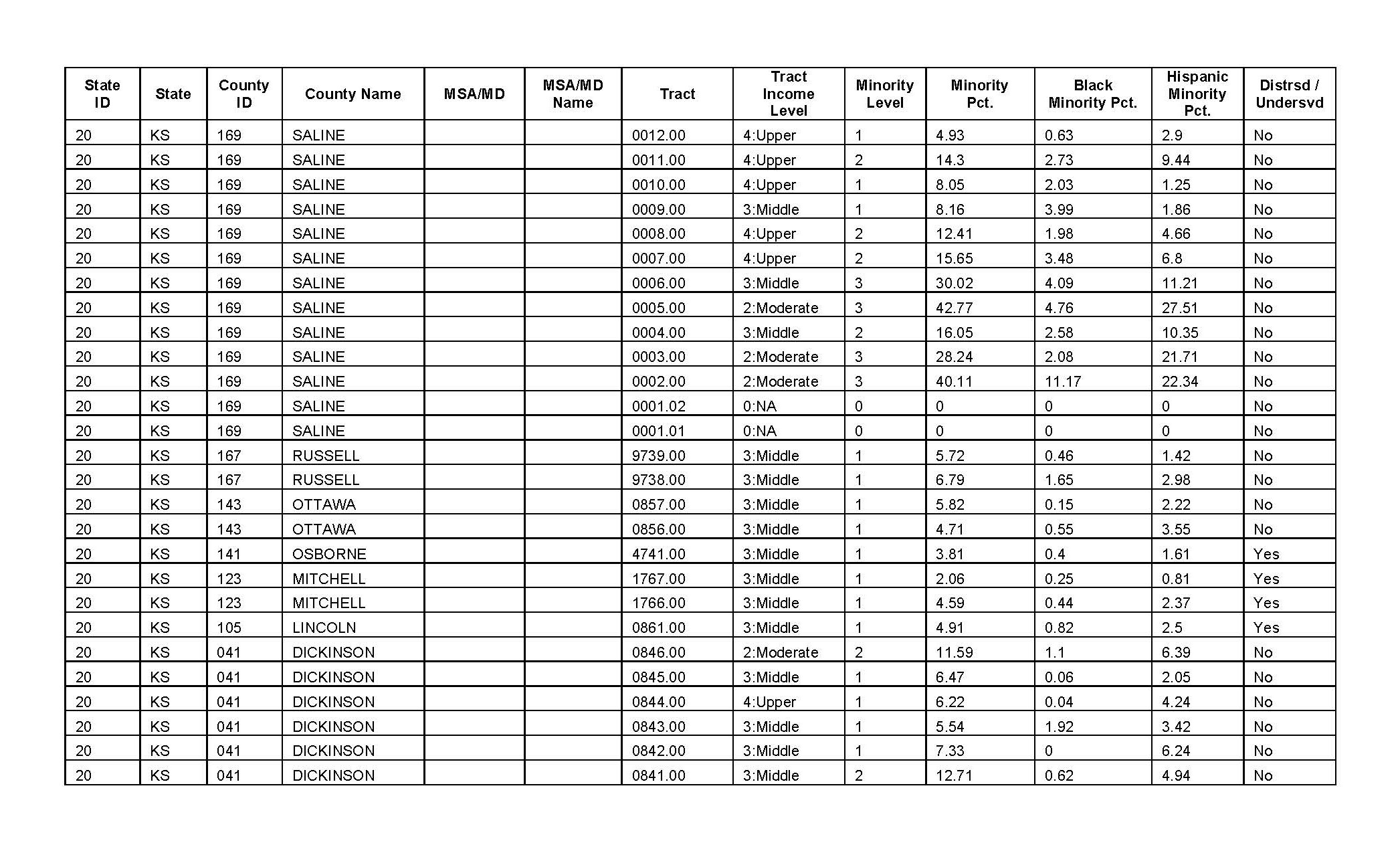
Bennington State Bank – Salina Assessment Area – Saline Co., Dickinson Co., Ottawa Co., Lincoln Co., Russell Co., Osborne Co., Mitchell Co.
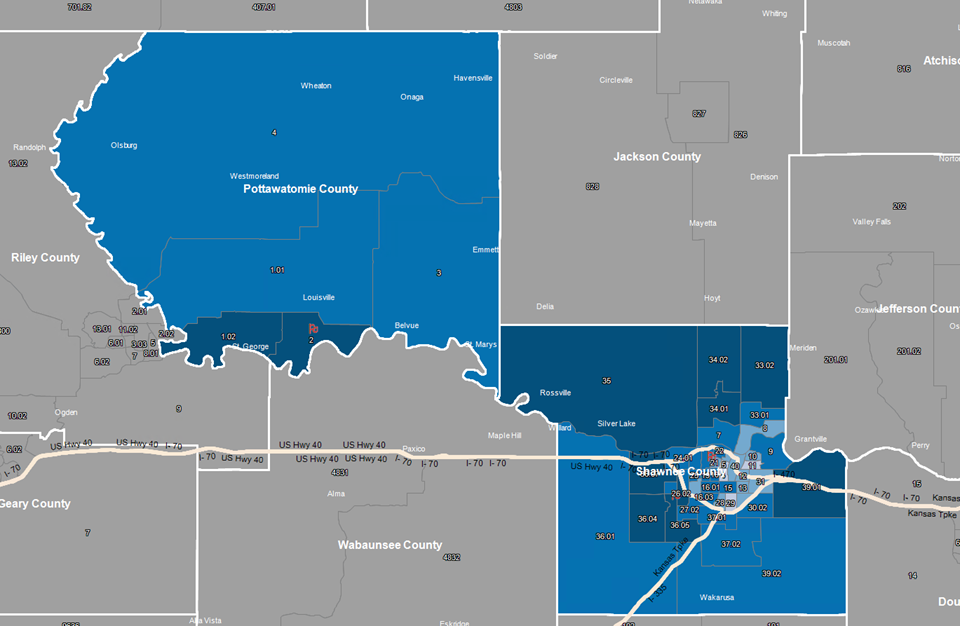
Bennington State Bank – Wamego /Topeka Assessment Area – Pottawatomie County & Shawnee County
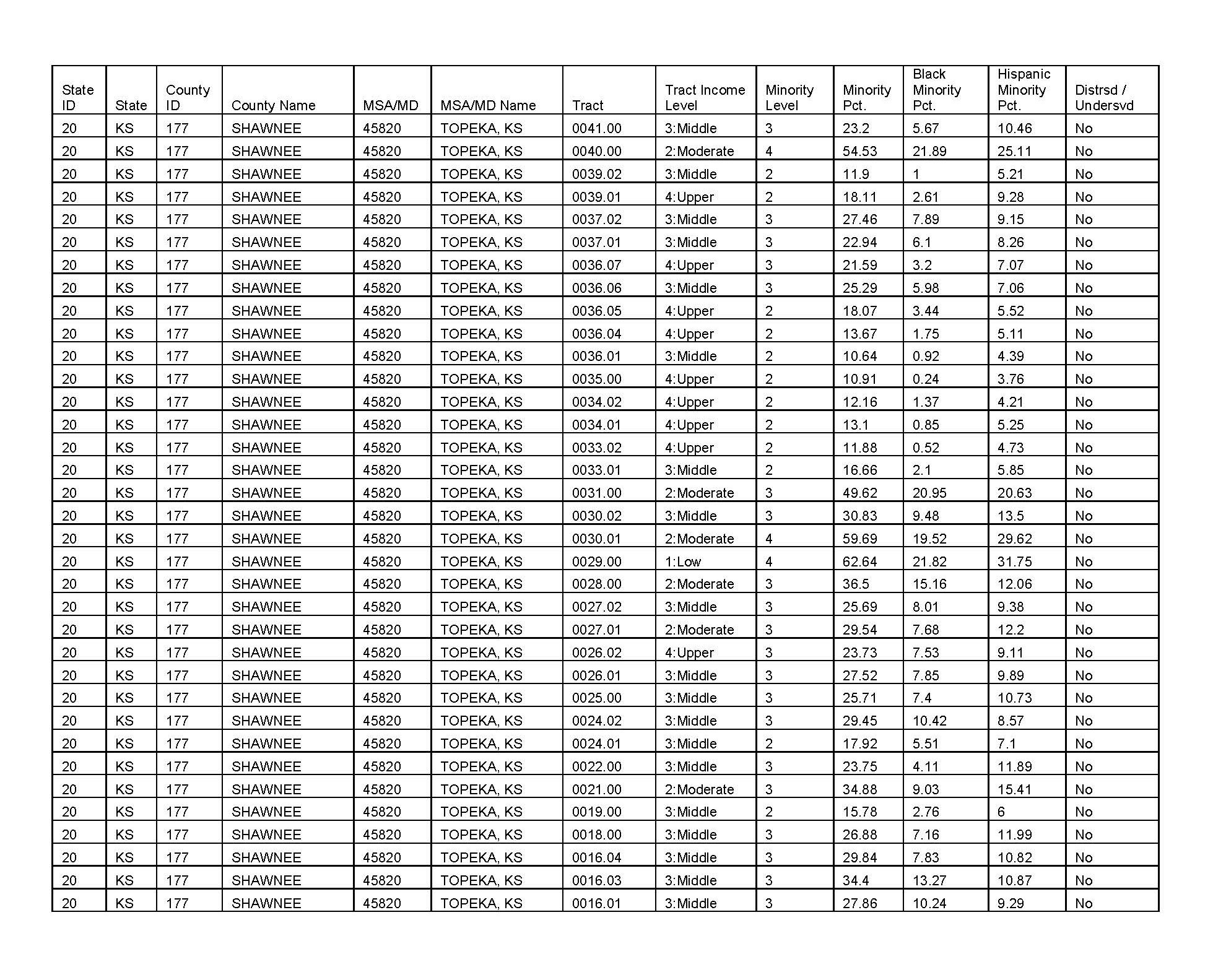
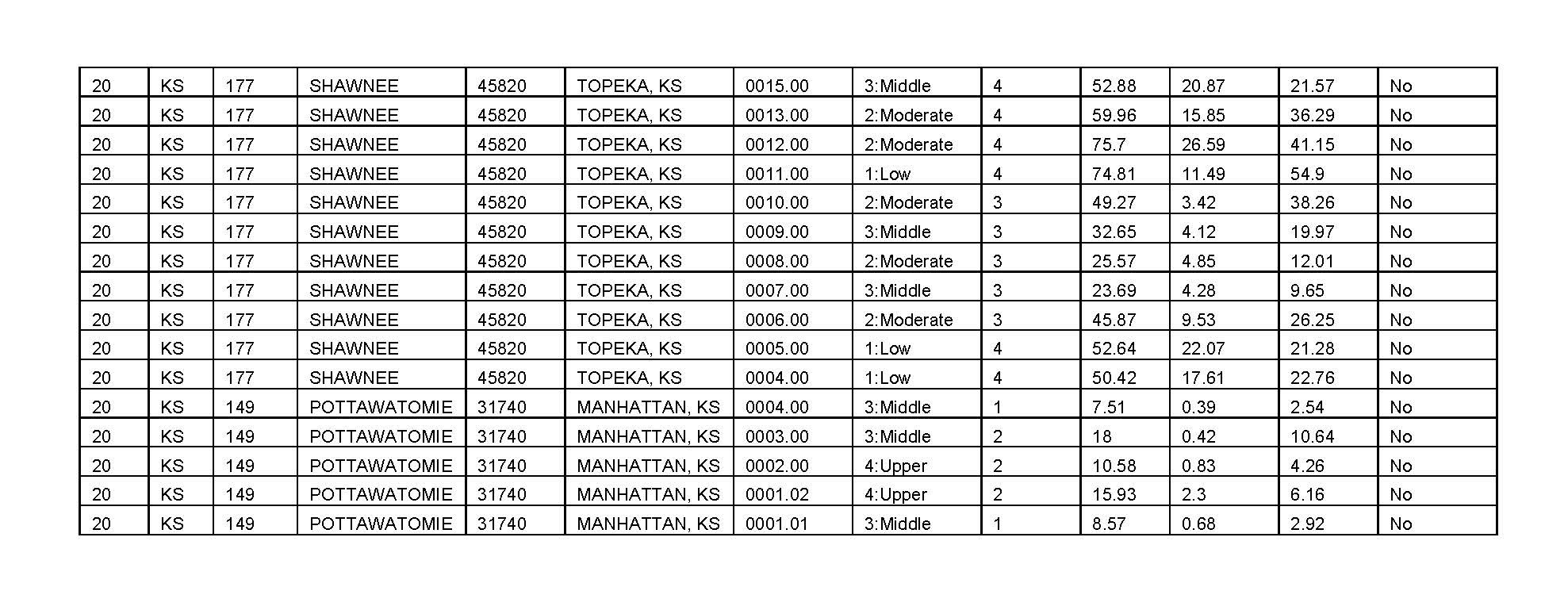
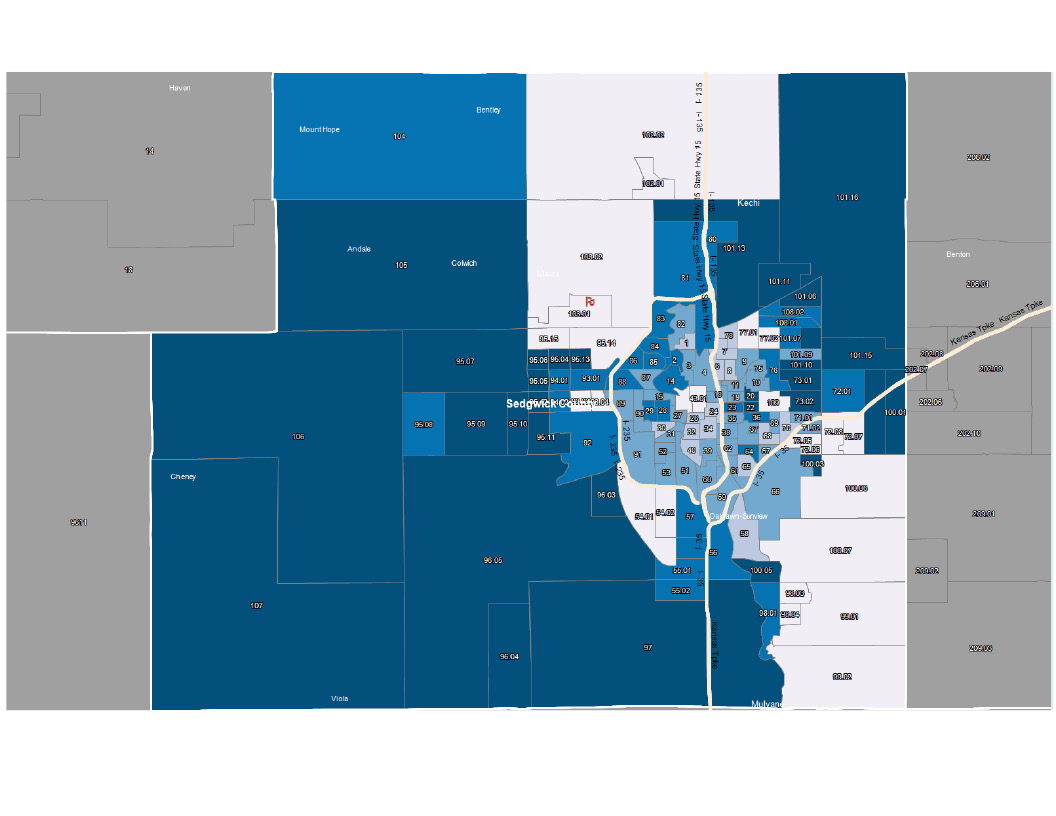
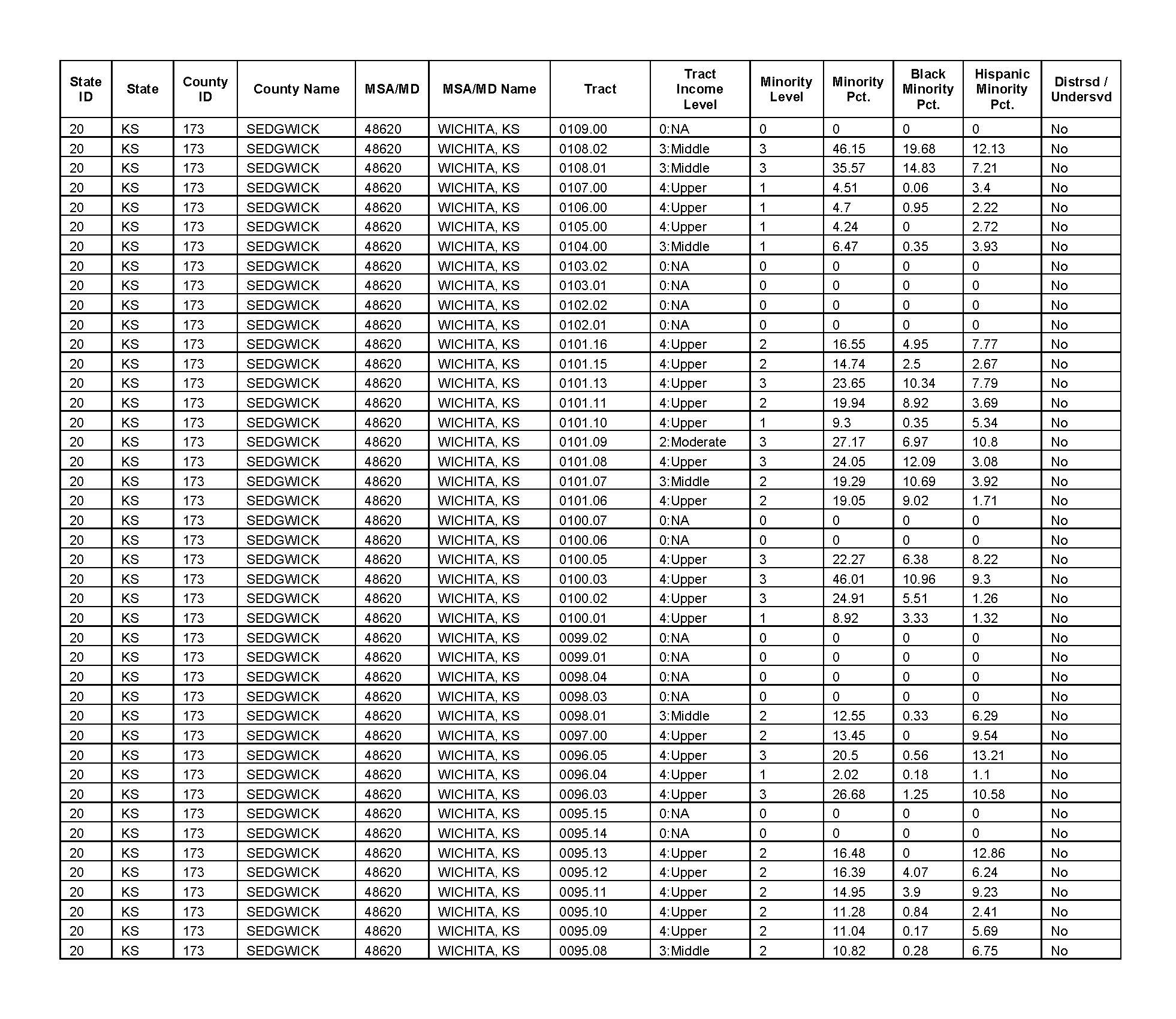
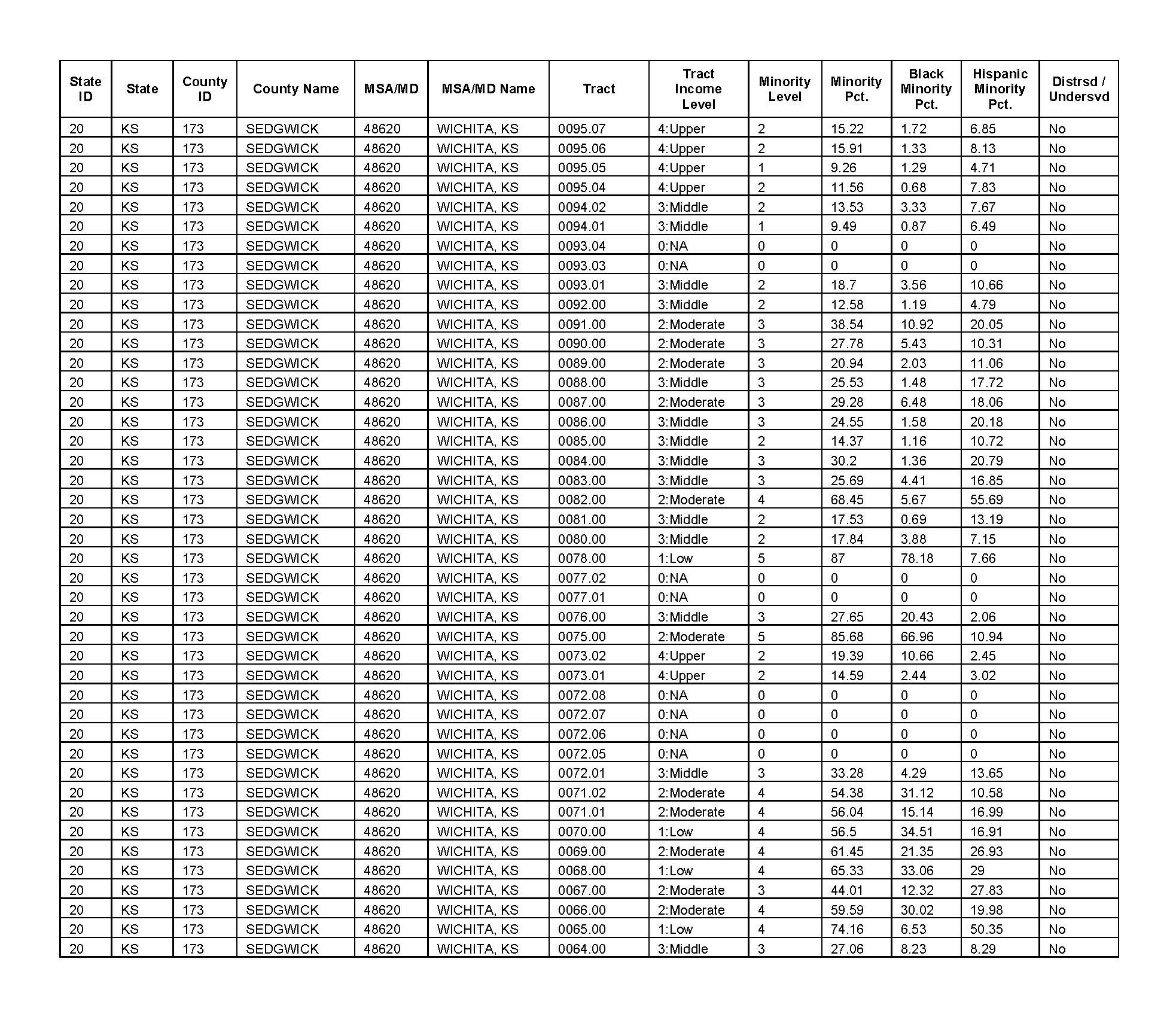
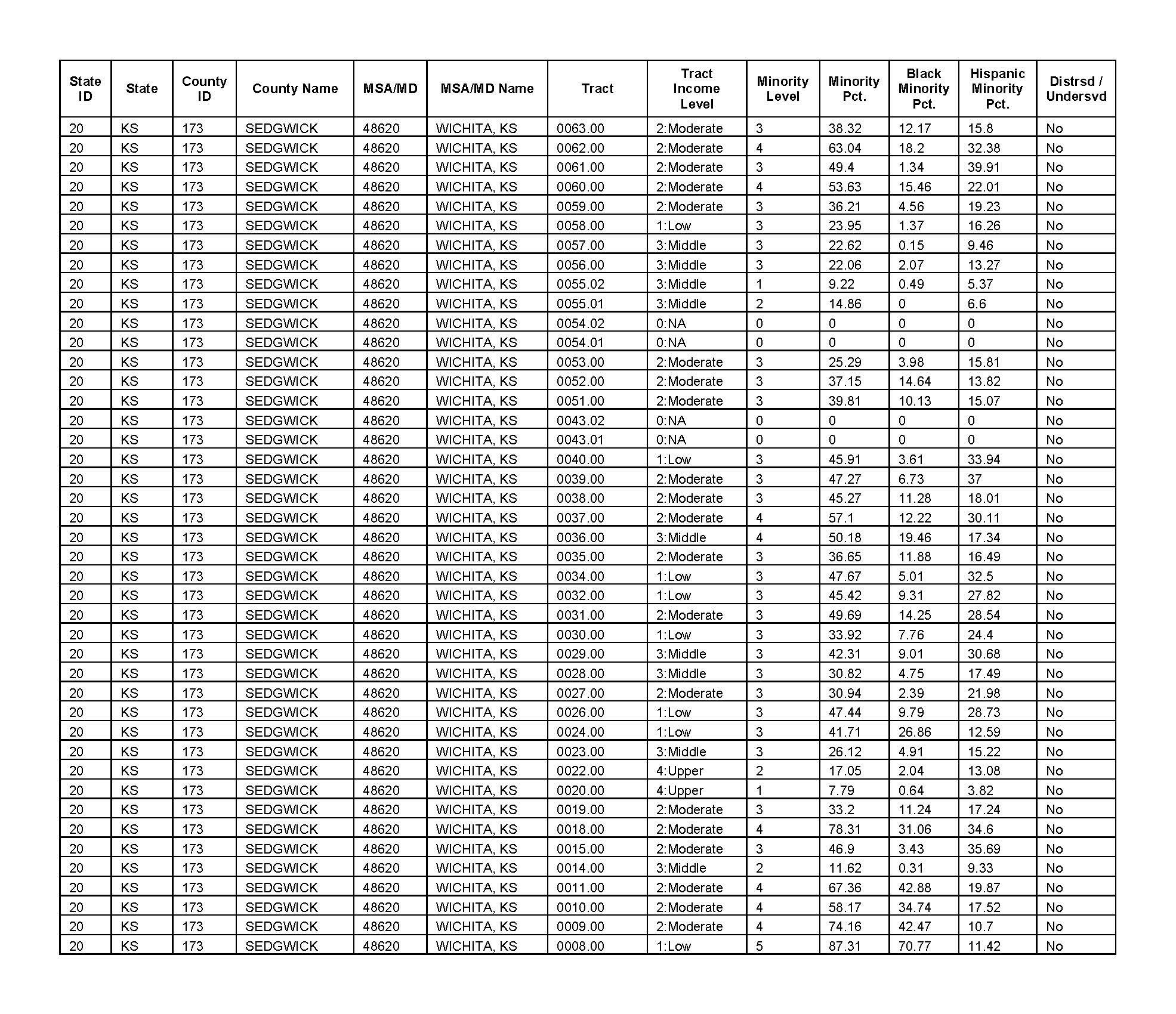
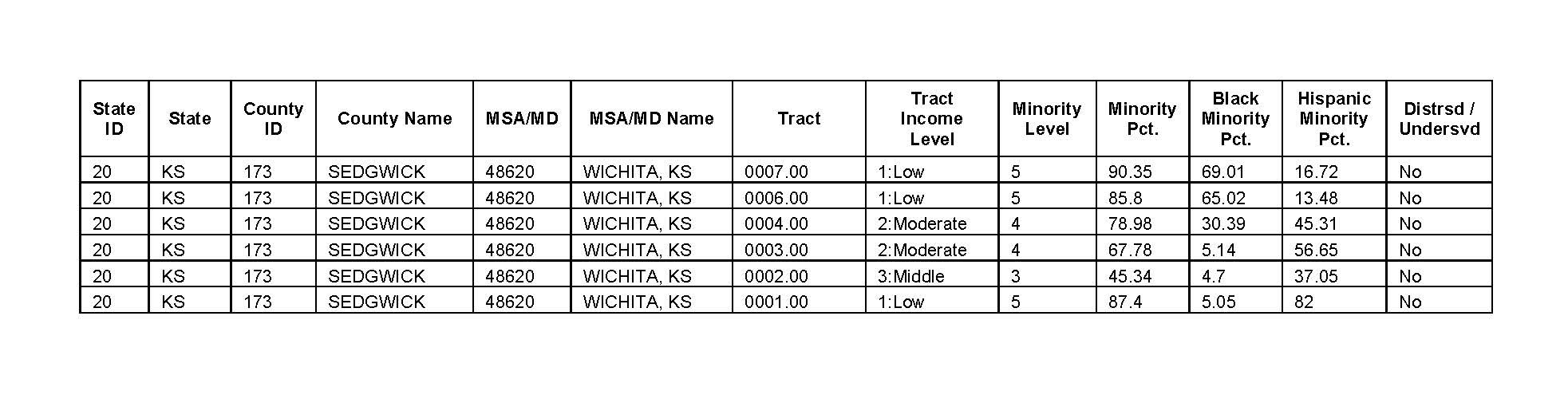
Bennington State Bank – Wichita Assessment Area – Sedgwick County
Branch Listing
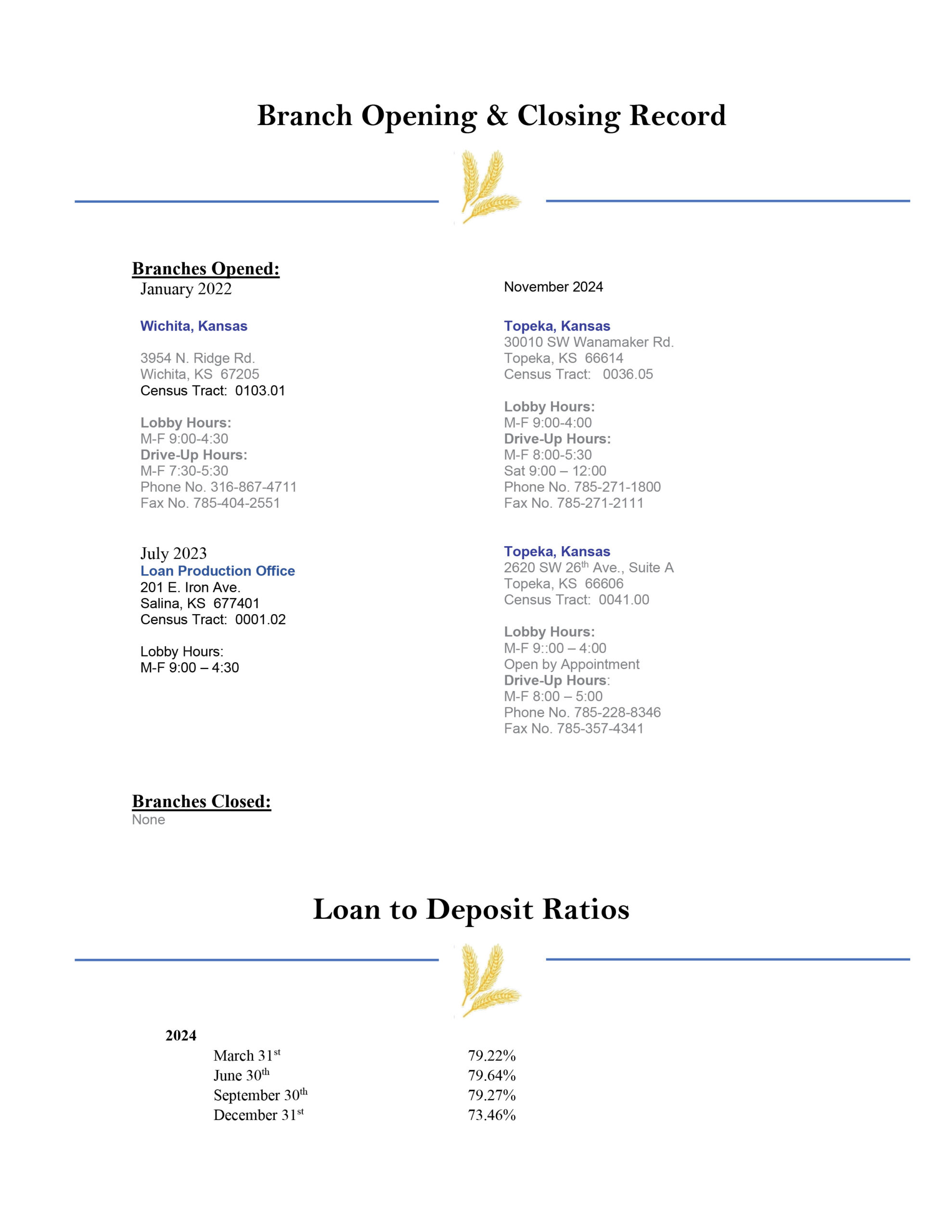
Salina, Kansas Ohio
2130 South Ohio Street
Salina, KS 67401
Census Tract: 0007.00
Lobby Hours:
M-F 9:00-4:30
Drive-Up Hours:
M-F 7:30-5:30
Sat 8:30-12:30
Phone No. 785-827-5522
Fax No. 785-827-7577
ATM Available
Salina, Kansas 9th
200 South 9th Street
Salina, KS 67401
Census Tract: 0003.00
Lobby Hours:
M-F 9:00-4:30
Drive-Up Hours:
M-F 7:30-5:30
Sat 8:30-12:30
Phone No. 785-827-1264
Fax No. 785-827-7324
ATM Available
Abilene, Kansas
416 Northwest 3rd Street
Abilene, KS 67410
Census Tract: 0844.00
Lobby Hours:
M-F 9:00-3:00
Drive-Up Hours:
M-F 8:00-5:00
Phone No. 785-571-9226
Fax No. 785-404-2551
Bennington, Kansas
104 West Washington Street
Bennington, KS 67422
Census Tract: 0856.00
Lobby Hours:
M-F 9:00-3:00
Drive-Up Hours:
M-F 8:00-5:00
Phone No. 785-488-3344
Fax No. 785-488-3347
ATM Available
Minneapolis, Kansas
320 West 2nd Street
Minneapolis, KS 67467
Census Tract: 0857.00
Lobby Hours:
M-F 9:00-3:00
Drive-Up Hours:
M-F 8:00-5:00
Phone No. 785-392-2136
Fax No. 785-392-2139
ATM Available
Sylvan Grove, Kansas
102 North Main Street
Sylvan Grove, KS 67481
Census Tract: 0861.0
Lobby Hours:
M-F 9:00-3:00
Drive-Up Hours:
M-F 8:00-5:00
Phone No. 785-526-7155
Fax No. 785-526-7158
ATM Available
Lucas, Kansas
132 South Main Street
Lucas, KS 67648
Census Tract: 9739.00
Lobby Hours:
M-F 9:00-3:00
Drive-Up:
M-F 8:00-5:00
Phone No. 785-525-6445
Fax No. 785-525-6186
ATM Available
Wamego, Kansas
1210 Commerce Drive
Wamego, KS 66547
Census Tract: 0002.00
Lobby Hours:
M-F 9:00-3:00
Drive-Up Hours:
M-F 7:30-5:30
Sat 8:00-12:00
Phone No. 785-456-1806
Fax No. 785-456-1807
ATM Available
Topeka, Kansas
3001 SW Wanamaker Rd.
Topeka, KS 66614
Census Tract: 0036.05
Lobby Hours:
M-F 9:00-4:00
Drive-Up Hours:
M-F 8:00-5:30
Sat 9:00 – 12:00
Phone No. 785-271-1800
Fax No. 785-271-2111
ATM Available
Topeka, Kansas
2620 SW 6th Ave., Suite A
Topeka, KS 66606
Census Tract: 0041.00
Lobby Hours:
M-F 9:00 – 4:00
Open by Appointment
Drive-Up Hours:
M-F 8:00 – 5:00
Phone No. 785-228-8346
Fax No. 785-357-4341
ATM Available
Wichita, Kansas
3954 N. Ridge Rd.
Wichita, KS 67205
Census Tract: 0103.01
Lobby Hours:
M-F 8:00-4:30
Drive-Up Hours:
M-F 8:00-5:00
Phone No. 316-867-4711
Fax No. 785-404-2551
ATM Available
Off Premise ATMs
Rolling Hills Zoo
625 N. Hedville Road Salina, KS
Census Tract: 0011.00
Salina Regional Health Center
400 S Santa Fe Salina, KS
Census Tract: 0001.01
Administrative Office
201 E. Iron Ave.
Salina, KS 67401
Census Tract: 0001.02
Lobby Hours:
M-F 9:00 – 4:30
Home Mortgage Disclosure Act Data (HMDA)
Bennington State Bank’s (BSB) HMDA Disclosure Statement may be obtained on the Consumer Financial Protection Bureau’s Website at www.consumerfinance.gov.hmda
Public Comments
No public comments have been made during the current period.
CRA Performance Evaluation
The Public Disclosure from Bennington State Bank’s August 7, 2023 CRA Performance Evaluation is attached following this page.
PUBLIC DISCLOSURE- AUGUST 7, 2023
COMMUNITY REINVESTMENT ACT PERFORMANCE EVALUATION
The Bennington State Bank
Certificate Number: 16402
2130 South Ohio Street
Salina, Kansas 67401
Federal Deposit Insurance Corporation
Division of Depositor and Consumer Protection
Kansas City Regional Office
1100 Walnut Street, Suite 2100
Kansas City, Missouri 64106
This document is an evaluation of this institution’s record of meeting the credit needs of its entire community, including low- and moderate-income neighborhoods, consistent with safe and sound operation of the institution. This evaluation is not, nor should it be construed as, an assessment of the financial condition of this institution. The rating assigned to this institution does not represent an analysis, conclusion, or opinion of the federal financial supervisory agency concerning the safety and soundness of this financial institution.
INSTITUTION RATING
An institution in this group has a satisfactory record of helping to meet the credit needs of its assessment areas, including low- and moderate-income neighborhoods, consistent with its resources and capabilities.
The Bennington State Bank’s Community Reinvestment Act (CRA) performance under the Lending Test and Community Development Test supports the rating. The following points summarize the bank’s Lending Test and Community Development Test performance.
The Lending Test is rated Satisfactory.
- The loan-to-deposit ratio is reasonable given the institution’s size, financial condition, and the credit needs of the assessment areas.
- A majority of the small business, home mortgage, and small farm loans are inside the bank’s
assessment areas. - The geographic distribution of loans reflects reasonable dispersion throughout the assessment areas.
- The distribution of borrowers reflects reasonable penetration among businesses and farms of
different revenue sizes and individuals of different income levels. - The institution did not receive any CRA-related complaints since the previous evaluation;
therefore, this factor did not affect the Lending Test rating.
The Community Development Test is rated Satisfactory.
The institution demonstrated adequate responsiveness to the community development needs of its assessment areas through community development loans, qualified investments, and community development services, as appropriate. Examiners considered the institution’s capacity and the need and availability of such opportunities in the assessment area.
DESCRIPTION OF INSTITUTION
The Bennington State Bank is a full-service community bank headquartered in Salina, Kansas, and it is wholly-owned by Berco, Inc., in Salina, Kansas. The institution received a Satisfactory rating at its previous FDIC Performance Evaluation dated August 3, 2020, based on Interagency Intermediate Small Institution Examination Procedures.
The Bennington State Bank operates nine full-service branches in central Kansas. Since the previous evaluation, the bank opened one branch in Abilene, Kansas, and another branch in Wichita, Kansas. Neither branch is located in a low- or moderate-income census tract. The institution offers traditional loan products, including commercial, agricultural, home mortgage, and consumer loans. Commercial loans are the bank’s primary focus, although notable levels of home mortgage and agricultural loans are originated as well. This is a change from the prior evaluation, where agricultural loans were the bank’s primary focus.
The bank was also an active originator of loans under the Small Business Administration’s Paycheck Protection Program (PPP), which was established in 2020 to provide relief to small businesses during the Coronavirus Disease 2019 pandemic. The bank originated 694 PPP loans
totaling $21.3 million during the evaluation period.
The Bennington State Bank provides a variety of deposit services, including checking, savings, money market deposit accounts, and certificates of deposit. Alternative banking services include internet and mobile banking, electronic bill pay, and eight cash dispensing bank-owned ATMs. In addition, the bank is a member of a third-party network that provides customers with access to thousands of surcharge-free ATMs across the county.
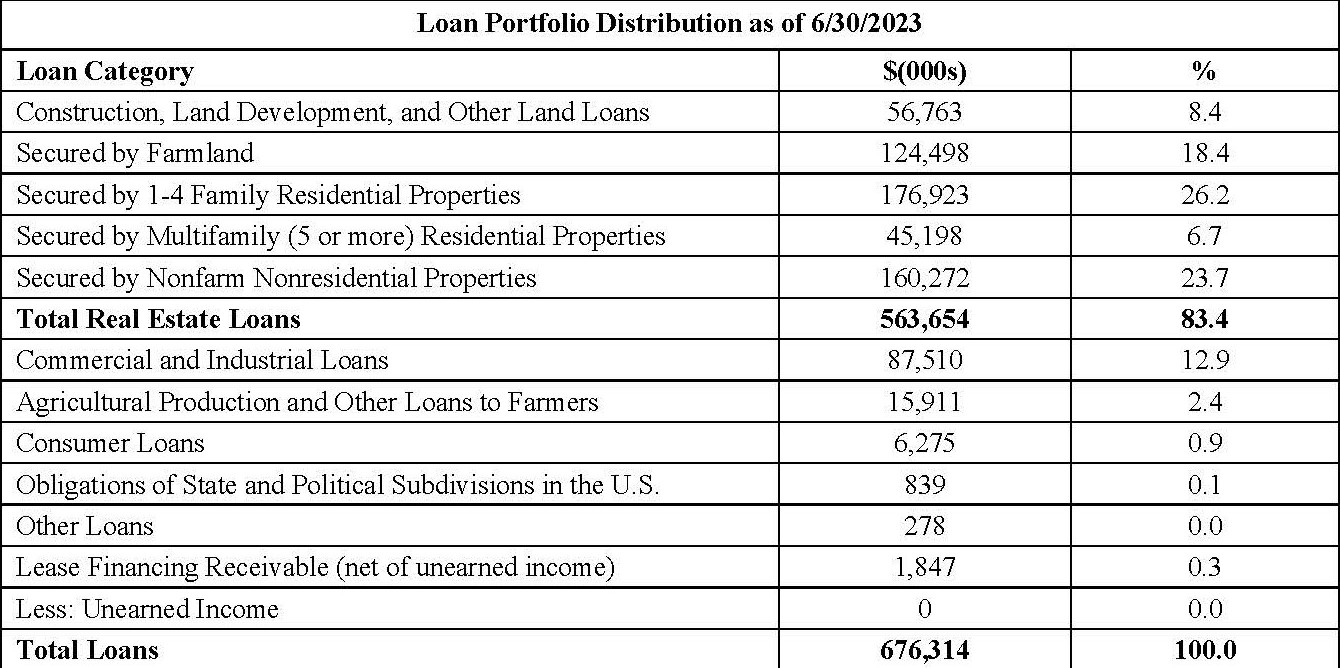
According to the June 30, 2023, Reports of Condition and Income, the institution reported total assets of $987 million, total loans of $676 million, and total deposits of $840 million. The following table shows the distribution for each loan category by dollar volume. The largest
component of the loan portfolio is commercial loans at 36.6 percent. This is followed by home mortgage loans at 32.9 percent, and agricultural loans at 20.8 percent.
Loan Portfolio Distribution as of 6/30/2023
Examiners did not identify any financial, legal, or other impediments that affect the bank’s ability tomeet assessment area credit needs.
DESCRIPTION OF ASSESSMENT AREAS
SCOPE OF EVALUATION
This evaluation covers the period from the prior evaluation dated August 3, 2020, to the current evaluation dated August 7, 2023. Examiners used Interagency Intermediate Small Institution Examination Procedures to evaluate the bank’s CRA performance. These procedures include the Lending Test and the Community Development Test, which are described in the Appendix. Banks must achieve at least a Satisfactory rating under each Test to obtain an overall Satisfactory rating. The Salina Assessment Area received a full-scope review and carried the most weight in the analysis as it represents the majority of the bank’s lending, deposits, and branches. The Wamego Assessment Area received a limited-scope review since the bank has one branch in this area, and the bank’s operations represent a much smaller portion of the overall lending and deposit activity. Finally, although the Wichita Assessment Area is similar to the Wamego Assessment Area in both lending and branch activity, it received a full-scope review since it is new since the prior evaluation.
Activities Reviewed
Examiners determined the bank’s major product lines include commercial, home mortgage, and agricultural loans. This conclusion considered the bank’s business strategy, and the number and dollar volume of loans originated during the evaluation period. Given the bank’s business strategy and the greater proportion of small business lending compared to other loan categories, small business lending received more weight when deriving conclusions. Small farm lending is not a product focus for the Wamego and Wichita Assessment Areas given the credit needs of those areas. Therefore, examiners did not evaluate small farm lending for the Wamego and Wichita Assessment
Areas. For small business and small farm loans, examiners reviewed all loans originated in 2022 since management indicated the bank’s lending patterns for that year were reasonably representative of the bank’s overall lending patterns since the previous evaluation. In 2022, the bank’s lending consisted of 217 small business loans totaling $47.3 million, and 273 small farm loans totaling $26.9 million. For home mortgage loans, examiners reviewed all loans reported on the bank’s 2020, 2021, and 2022 Home Mortgage Disclosure Act (HMDA) Loan Application Registers. This consisted of 391 home mortgage loans totaling $67.5 million in 2020, 414 home mortgage loans totaling $96.6 million in 2021, and 356 home mortgage loans totaling $78.1 million in 2022. The results for all three years are presented under the Assessment Area Concentration analysis. Examiners analyzed the home mortgage loans located within the assessment areas to evaluate the Geographic Distribution and Borrower Profile criteria. The review did not reveal any differences among the three years analyzed that would affect the overall conclusions. Therefore, examiners only presented the home mortgage analysis for 2022 since it is the most recent year in which aggregate data (the primary standard for comparison) is available. Nonetheless, examiners discussed any noteworthy variances between years in the corresponding narrative. For the Lending Test, examiners reviewed all of the above noted loans for the Assessment Area Concentration analysis. For the Geographic Distribution analysis, examiners reviewed all loans inside of the assessment areas for all three loan categories. For the Borrower Profile analysis, examiners reviewed all home mortgage loans and random samples of small business and small farm loans inside of the assessment areas. These samples consisted of 81 small business loans totaling $16.6 million, and 55 small farm loans totaling $5.6 million. For the Geographic Distribution and the Borrower Profile analyses, examiners used prescribed comparative data as the standard for comparison for determining performance. The 2022 D&B data provided a standard of comparison for the bank’s small business and small farm lending
performance. The 2022 HMDA aggregate data and 2020 U.S. Census data provided a standard of comparison for the bank’s home mortgage lending performance. Although both the number and dollar volume of loans were analyzed, examiners emphasized performance by number of loans, because it is a better indicator of the number of businesses, farms, and individuals served. For the Community Development Test, bank management provided data on community development loans, qualified investments, and community development services since the prior CRA evaluation up to the date of the current evaluation.
CONCLUSIONS ON PERFORMANCE CRITERIA
The Bennington State Bank’s satisfactory rating under the Lending Test is driven by its overall reasonable performance in all evaluated criteria.
Loan-to-Deposit Ratio
The loan-to-deposit ratio is reasonable given the institution’s size, financial condition, and assessment areas’ credit needs. The bank’s performance was evaluated based on the average net loan-to-deposit ratios since the previous evaluation (12 quarters). The bank’s average net loan-todeposit ratio of 77.2 percent compares reasonably to similarly situated banks. Examiners selected the similarly situated banks based on their asset size, geographic location, and product mix. See the following table for details.
Loan-to-Deposit Ratio Comparison
| Bank | Total Assets as of 6/30/2023 $(000s) |
Average Net Loan-to-Deposit Ration (%) |
|---|---|---|
| The Bennington State Bank, Salina, Kansas | 987,146 | 77.2 |
| Bank of the Flint Hills, Wamego, Kansas | 437,280 | 87.4 |
| Legacy Bank, Colwich, Kansas | 655,092 | 74.2 |
| First Bank Kansas, Salina, Kansas | 548,128 | 54.0 |
Assessment Area Concentration
The bank made a majority of its small business, home mortgage, and small farm loans within the assessment areas, as illustrated in the following table.
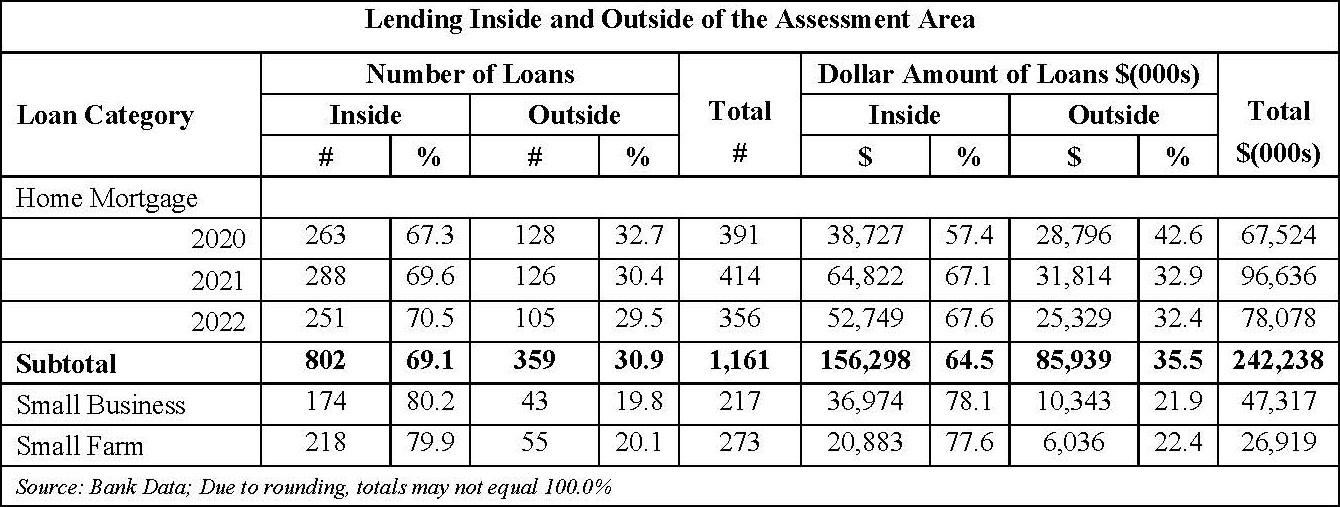
The geographic distribution of loans reflects reasonable dispersion throughout the assessment areas. This overall conclusion is based on the performance in the Salina and Wichita Assessment Areas. The Wamego Assessment Area does not contain any low- or moderate-income census tracts; therefore, geographic distribution was not evaluated. Examiners focused on the bank’s record of lending in low- and moderate-income census tracts. A complete discussion of the bank’s performance in each assessment area can be found in the corresponding sections of this evaluation.
Borrower Profile
The distribution of borrowers reflects reasonable penetration among businesses and farms of different sizes and individuals of different income levels. Performance in all three assessment areas is consistent with this conclusion. For small business and small farm loans, examiners focused on the bank’s lending to businesses and farms with gross annual revenues of $1 million or less. For home mortgage loans, examiners focused on the bank’s lending to low- and moderate-income individuals. A complete discussion of the bank’s performance in each assessment area can be found in the corresponding sections of this evaluation.
Response to Complaints
The bank has not received any CRA-related complaints since the previous evaluation; therefore, this criterion did not affect the Lending Test rating.
COMMUNITY DEVELOPMENT TEST
As part of determining performance, examiners compared the bank’s performance to four other similarly situated banks in Kansas. The Bennington State Bank’s community development activities are adequately responsive to the needs of the assessment areas.
Community Development Loans
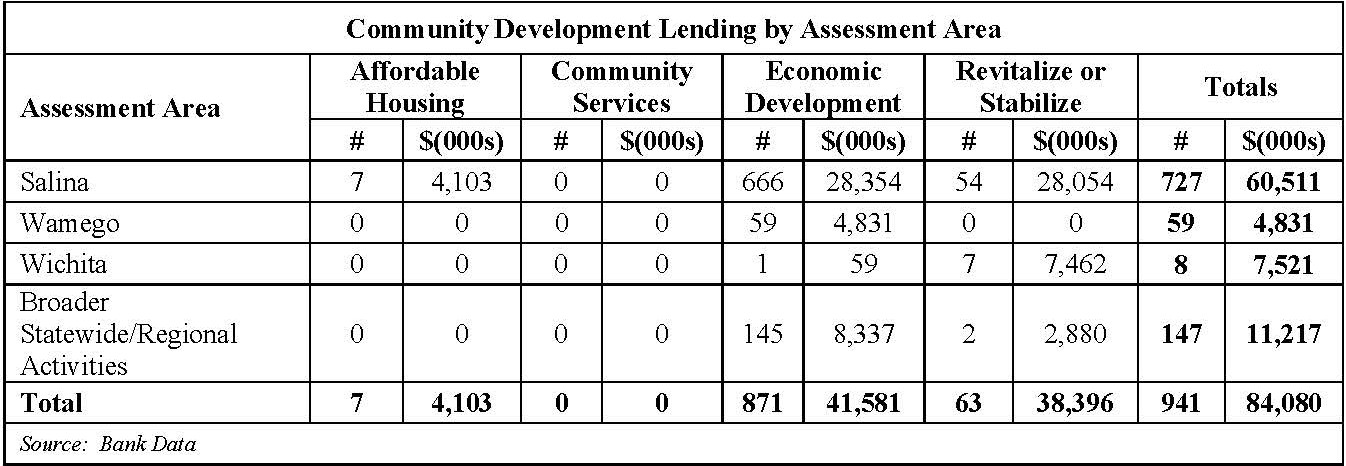
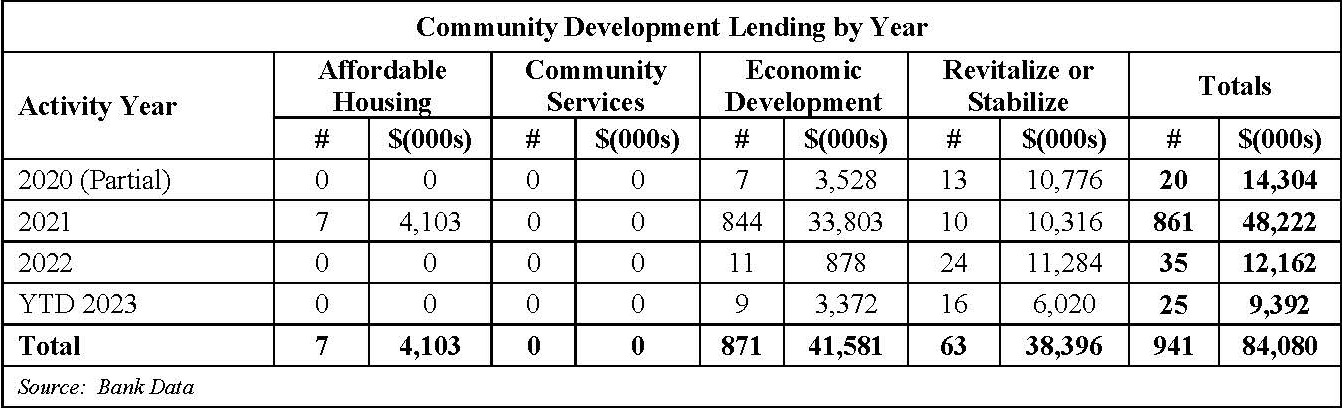
The Bennington State Bank originated or renewed 941 community development loans totaling $84.1 million during the evaluation period. Of the 941 qualified community development loans, 694 were PPP loans totaling $21.3 million.
As of June 30, 2023, the community development lending by dollar volume represents 8.5 percent of total assets and 12.7 percent of net loans. This level of lending exceeds the bank’s performance at the prior evaluation, when community development loans were 5.7 percent of total assets and 9.0 percent of net loans. The Bennington State Bank’s level of community development loans to net loans lags similarly situated banks, with ratios ranging from 15.1 to 20.0 percent. By comparison, The Bennington State Bank’s level of community development loans to total assets is within the range of similarly situated banks, with ratios ranging from 8.1 to 13.3 percent. The following tables show the breakdown of community development loans by assessment area, qualifying category, and year.
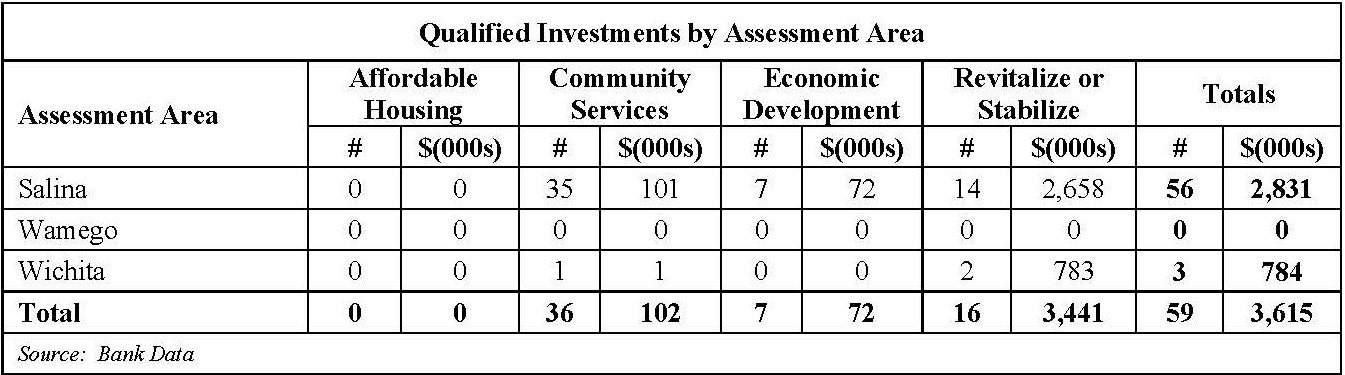
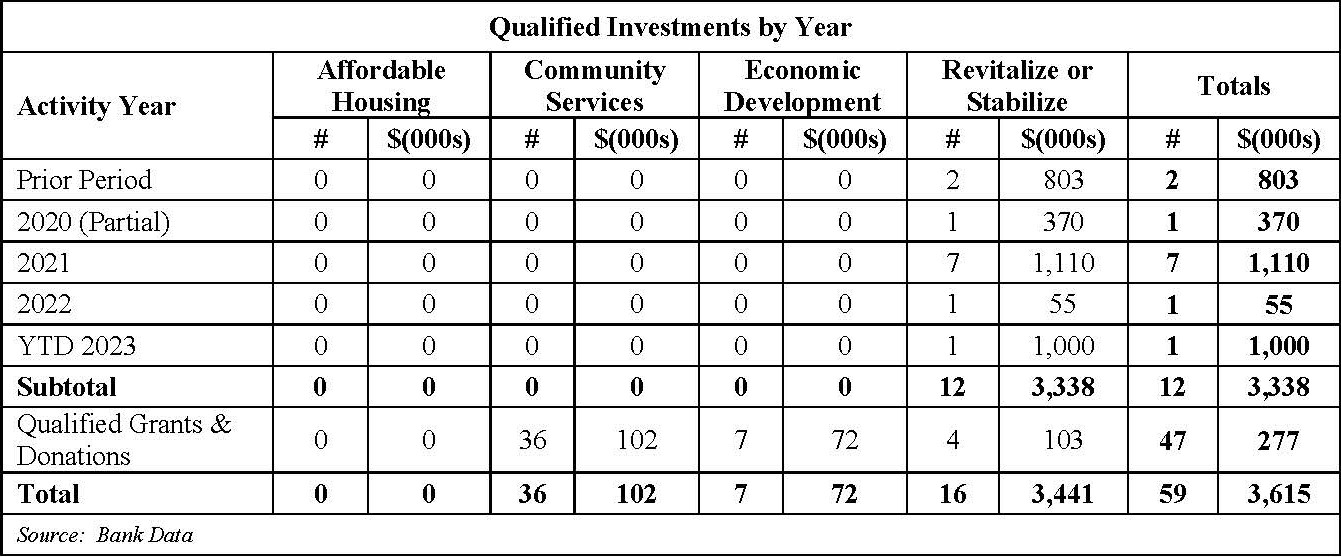
The Bennington State Bank had $3.6 million in qualified investment activity for the evaluation period. As of June 30, 2023, the bank’s total dollar volume of qualified investments equates to 0.4 percent of total assets, and 1.5 percent of total securities. This level of activity is less than the performance at the prior evaluation when the total dollar volume of qualified investments was 0.8 percent of total assets, and 3.5 percent of total securities. The bank’s level of qualified investments is at the lower end of the range among similarly situated banks with qualified investments ranging from 0.4 to 1.2 percent of total assets, and 1.0 to 11.6 percent of total securities. The following tables detail the bank’s qualified investments by assessment area, qualifying category, and year.
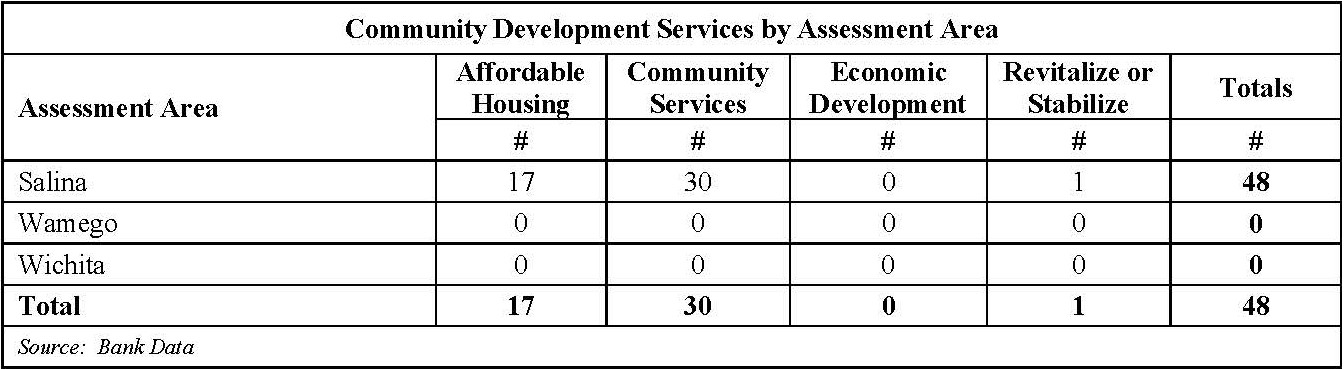
The Bennington State Bank had 48 qualifying community development services for this evaluation period. This level of services is more than the performance at the prior evaluation when the bank performed 21 community development services. This level of community development services is within the range of similarly situated banks, which ranged from 39 to 59 services. The following tables illustrate the bank’s community development services by assessment area, qualifying category, and year.
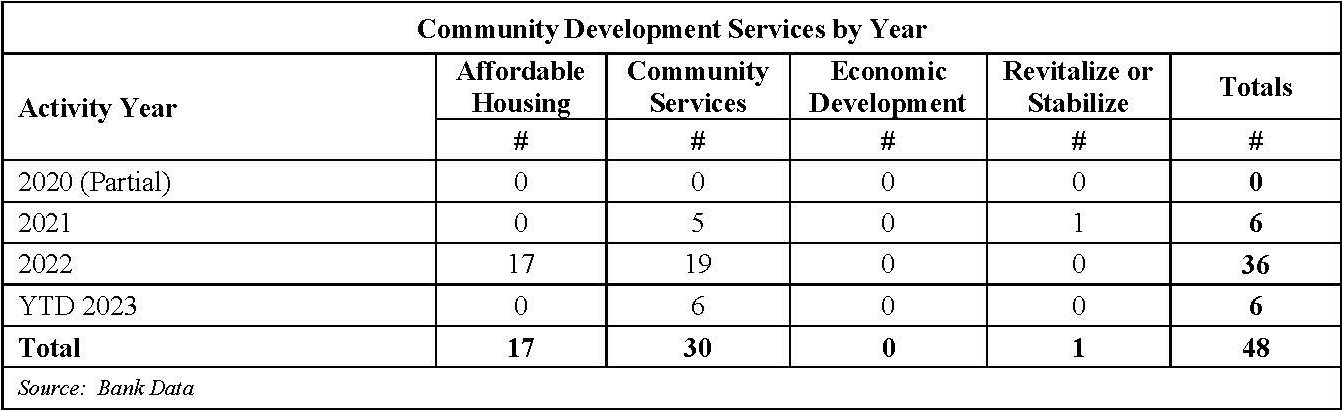
One of the more notable community development services is that The Bennington State Bank is active in helping low- or moderate-income individuals and families obtain grants through a firsttime homebuyer program with Federal Home Loan Bank. The bank’s efforts through this program have resulted in more than 80 such grants to qualifying borrowers during the evaluation period. This is particularly noteworthy since it demonstrates the bank’s efforts to increase the availability of financial services to low- or moderate-income individuals and families who otherwise may not have had access to such funding.
The bank also offers basic low-cost checking and savings accounts, which helps increase access to financial services for low- or moderate-income individuals. In addition, the bank has a branch location in a moderate-income census tract in Salina, Kansas.
DISCRIMINATORY OR OTHER ILLEGAL CREDIT PRACTICES REVIEW
SALINA ASSESSMENT AREA – Full-Scope Review
DESCRIPTION OF INSTITUTION’S OPERATIONS IN THE SALINA ASSESSMENT AREA
The Salina Assessment Area consists of Dickinson, Lincoln, Mitchell, Osborne, Ottawa, Russell, and Saline counties. The bank added Dickinson County to its Salina Assessment Area after the opening of the branch in Abilene in 2021. The assessment area is located in the nonmetropolitan
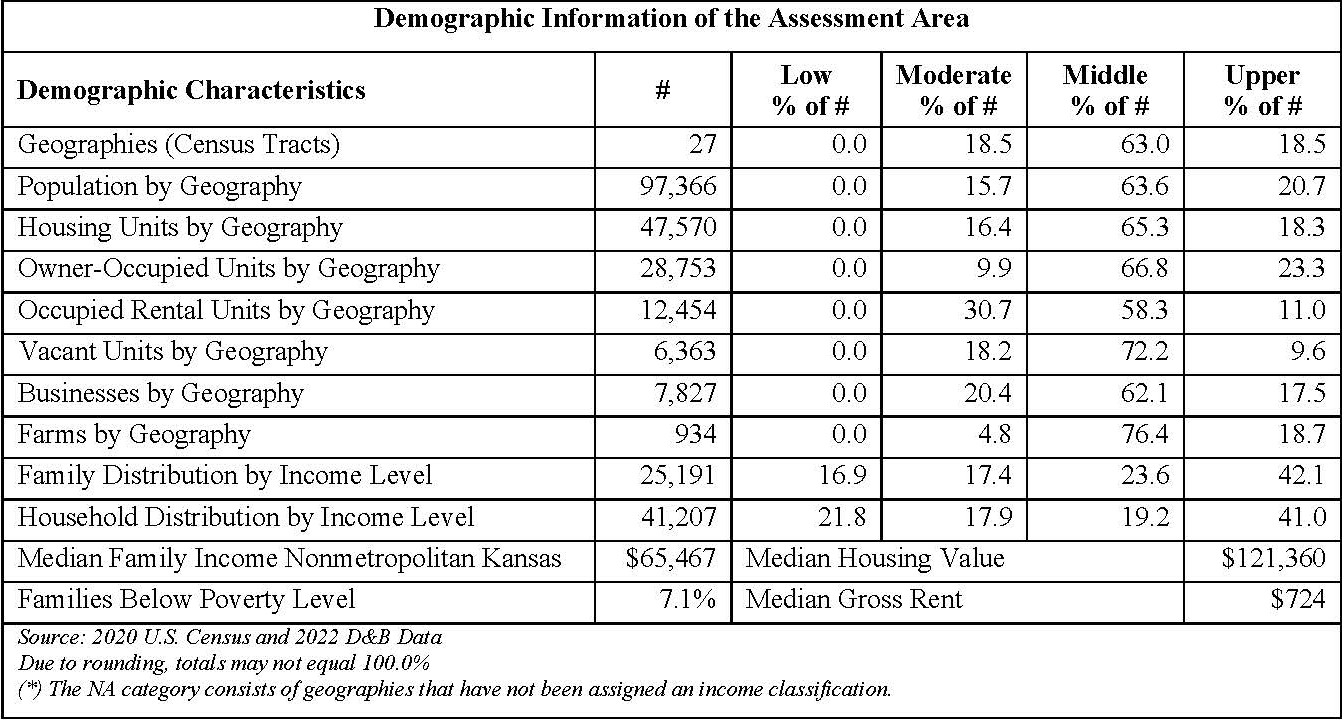
area of Kansas, and consists largely of rural countryside and farmland. The largest town in the assessment area is Salina (population 46,889 according to 2020 U.S. Census data), where 2 of the bank’s 9 offices are located. The following shows demographic and economic information from the 2020 U.S. Census and 2022 D&B data for this assessment area. Economic and Demographic Data The assessment area consists of 27 census tracts, which includes 5 moderate-income, 17 middle-income, and 5 upper-income tracts. The following table illustrates select demographic characteristics of the assessment area.
Competition
The competition for financial services in the assessment area is notable. According to June 30, 2022 FDIC Deposit Market Share data, there are 26 institutions operating 63 offices in the assessment area. The Bennington State Bank ranked first holding 18.9 percent of the deposit market share. Additionally, the 2022 HMDA aggregate data shows significant competition, with 144 lenders originating 1,342 home mortgage loans. The Bennington State Bank ranked first with 11.9 percent of the lending market share.
Credit and Community Development Needs and Opportunities
Considering demographic and economic data, examiners determined that small business, small farm, and home mortgage loans represent the primary credit needs in this assessment area. Opportunities exist for originating such loans, as indicated by aggregate data, along with area demographics on the number of small businesses, and the number of housing units in the assessment area. Community development needs include affordable housing, community services, economic development, and revitalization/stabilization, as evidenced by the number of small
businesses, and the number of low- and moderate-income families.
CONCLUSIONS ON PERFORMANCE CRITERIA IN THE SALINA ASSESSMENT AREA
LENDING TEST
Geographic Distribution
The Bennington State Bank’s geographic distribution of loans reflects reasonable dispersion throughout the assessment area. Examiners focused on the bank’s performance in the moderateincome census tracts as the assessment area does not include any low-income census tracts. The bank’s reasonable small business, home mortgage, and small farm lending performance supports this conclusion.
Small Business Loans
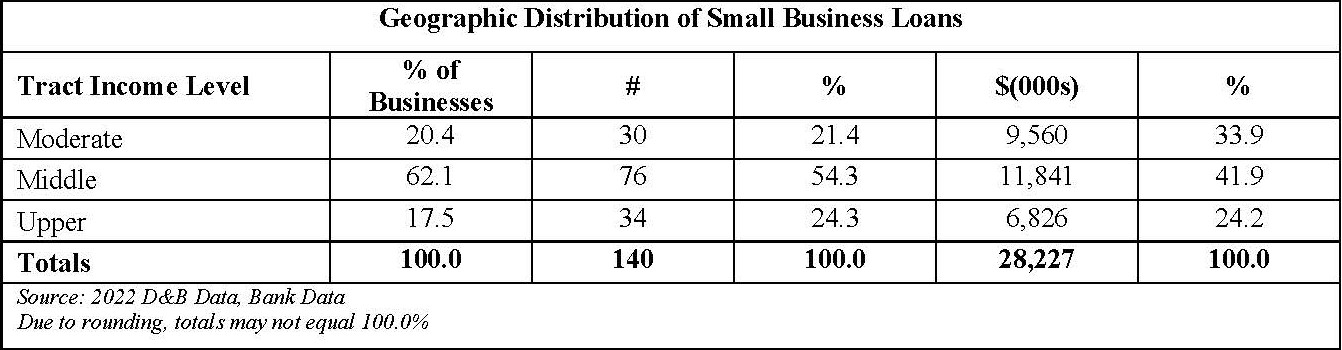
The geographic distribution of small business loans reflects reasonable dispersion throughout the assessment area. As shown in the following table, the bank’s level of lending in the moderate-income census tracts is comparable to demographic data.
Home Mortgage Loans
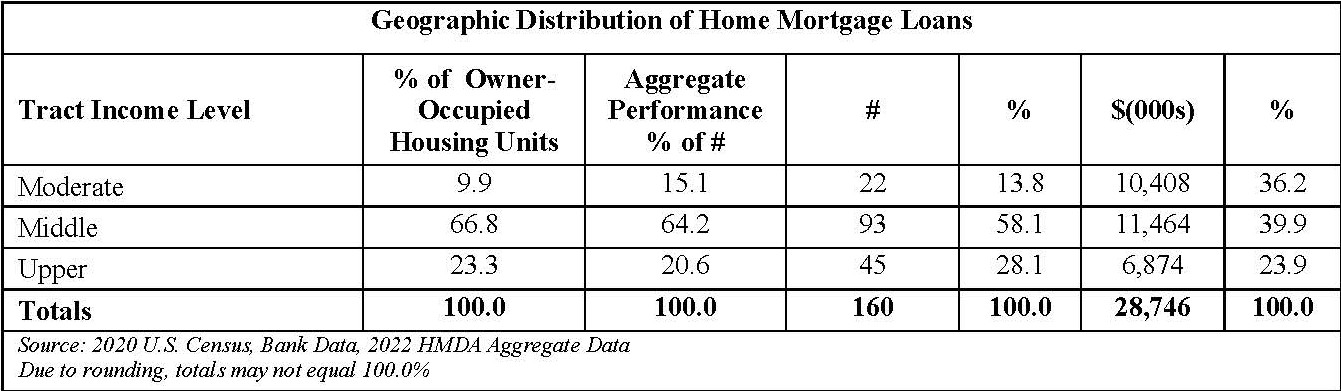
The geographic distribution of home mortgage loans reflects reasonable dispersion throughout the assessment area. As shown in the following table, the bank’s level of lending in the moderate-income census tracts is comparable to both demographic and aggregate data.
Small Farm Loans
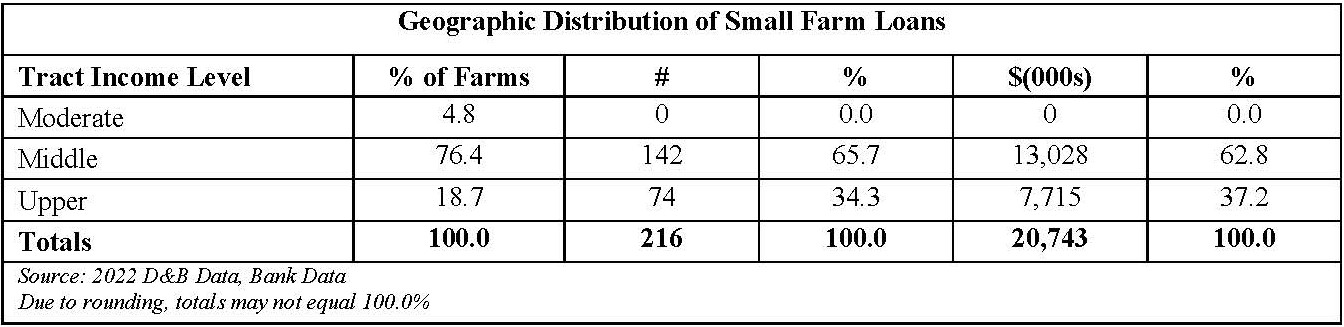
The geographic distribution of home mortgage loans reflects reasonable dispersion. The following table shows that the bank’s performance in moderate-income census tracts is below aggregate 11 performance. Although it is not shown in the table, the percentage of home loans extended in moderate-income geographies by number increased to 16 percent in 2019.
The distribution of borrowers reflects reasonable penetration among businesses and farms of different sizes and individuals of different income levels. The bank’s reasonable small business, home mortgage, and small farm lending performance supports this conclusion.
Small Business Loans
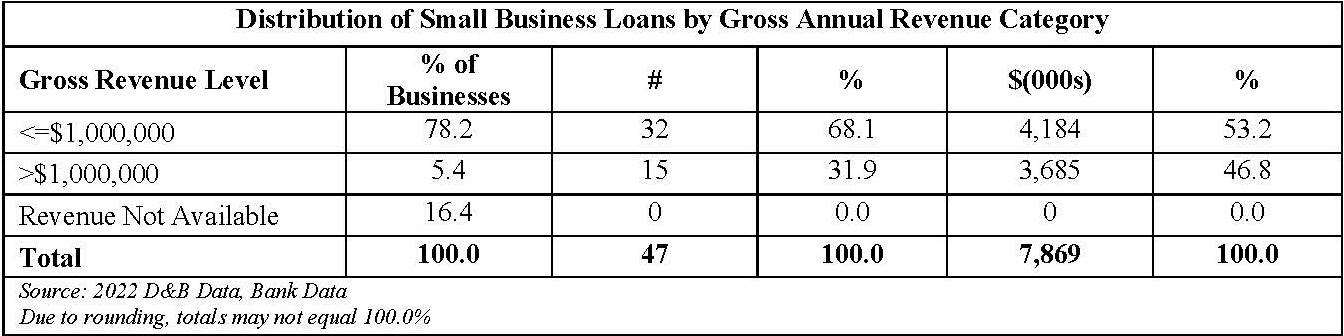
The Bennington State Bank’s record of extending small business loans to businesses of different sizes is reasonable. As shown in the following table, the bank’s level of lending to businesses with revenues of $1 million or less is proportionate to demographic data in this revenue category.
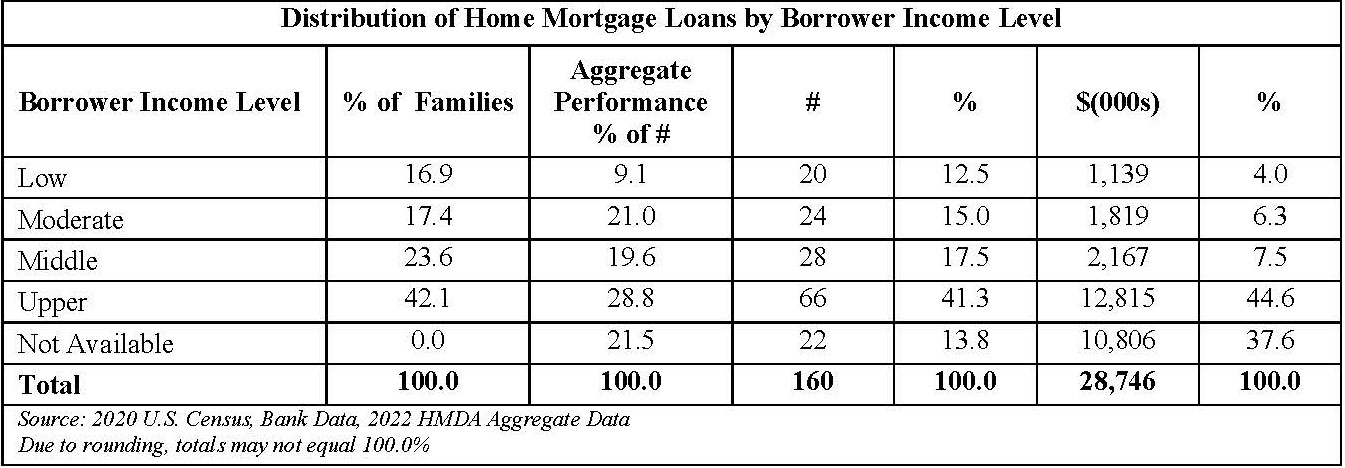
The Bennington State Bank’s record of extending home mortgage loans to borrowers of different income levels is reasonable. As shown in the following table, the bank’s level of lending to both low- and moderate-income borrowers is comparable to aggregate and demographic data.
Small Farm Loans
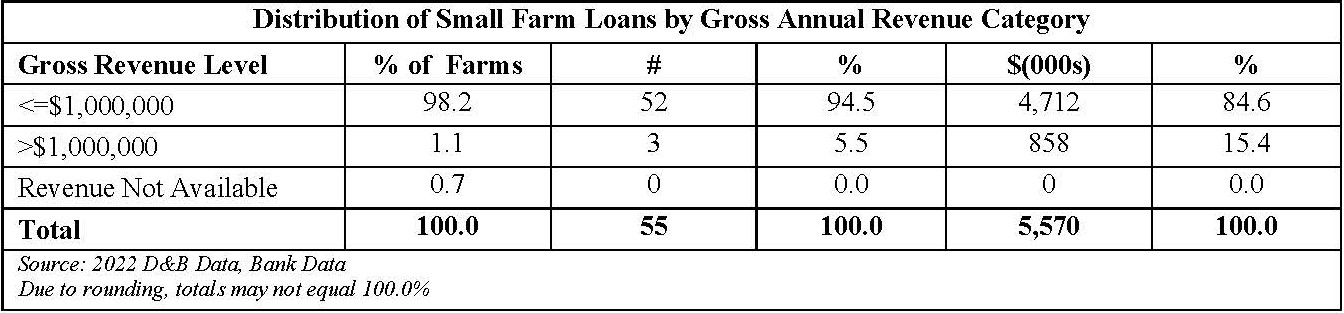
The distribution of loans to farms of different sizes is reasonable. As shown in the following table,
the bank’s level of lending to farms with revenues of $1 million or less is proportionate to
demographic data in this revenue category.
COMMUNITY DEVELOPMENT TEST
Community Development Loans
- The bank originated 727 community development loans totaling $60.5 million in this assessment area. Of the 727 loans, 653 were PPP loans totaling $20.8 million. The following are notable examples of community development loans. The bank originated a $4.3 million loan that helped with the stabilization of a moderateincome census tract by providing financing for the expansion of a business located in that tract.
- The bank originated a loan totaling approximately $2.0 million to help retain affordable housing in a moderate-income census tract.
Qualified Investments
The bank made 46 qualified investments totaling $2.7 million in the Salina Assessment Area. The following are notable examples of community development investments.
- The bank purchased a $750,000 share of a bond in which the proceeds are helping to improve a designated district located in a moderate-income census tract.
- The bank purchased a $390,000 share of a bond in which the proceeds are designated to various infrastructure improvements throughout moderate-income census tracts in the area.
Community Development Services
The bank provided 48 community development services within the Salina Assessment Area. These services primarily consisted of bank employees providing financial expertise to borrowers applying to the Kansas Housing Assistance Fund offered by the Kansas Housing Resources Corporation. This fund assists homeowners in Kansas who are struggling to make mortgage, utility, and tax payments.
WAMEGO ASSESSMENT AREA - Limited-Scope Review
DESCRIPTION OF INSTITUTION'S OPERATIONS IN THE WAMEGO ASSESSMENT AREA
Economic and Demographic Data
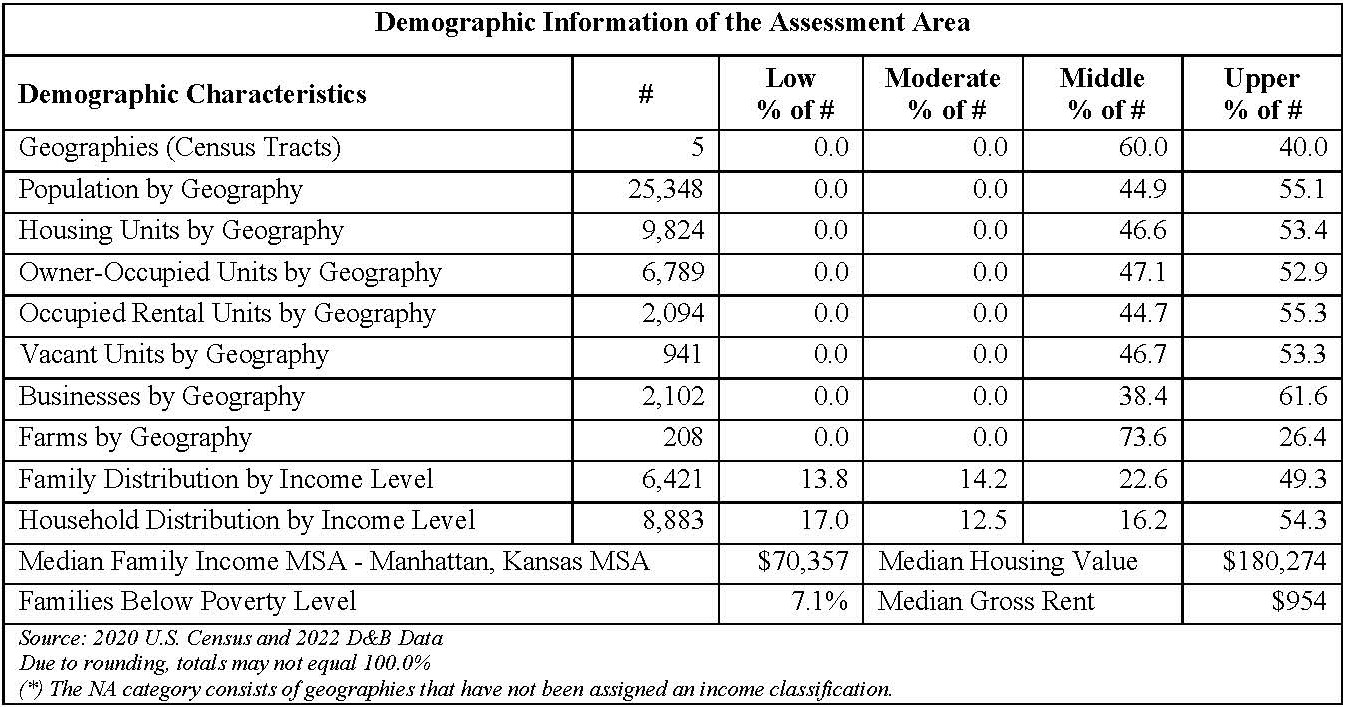
This assessment area includes five census tracts, of which three are middle-income census tracts, and two are upper-income census tracts. The following table illustrates select demographic characteristics of the Wamego Assessment Area.
CONCLUSIONS ON PERFORMANCE CRITERIA IN THE WAMEGO ASSESSMENT AREA
LENDING TEST
Small Business Loans
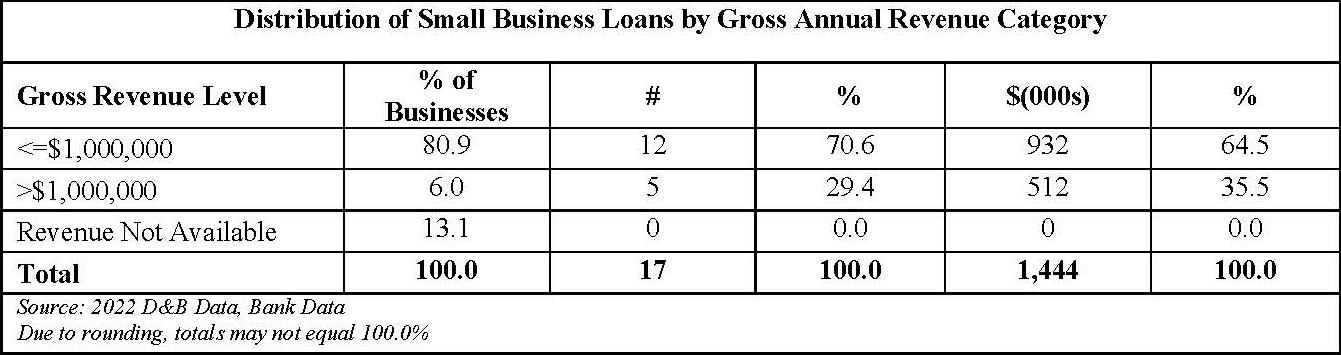
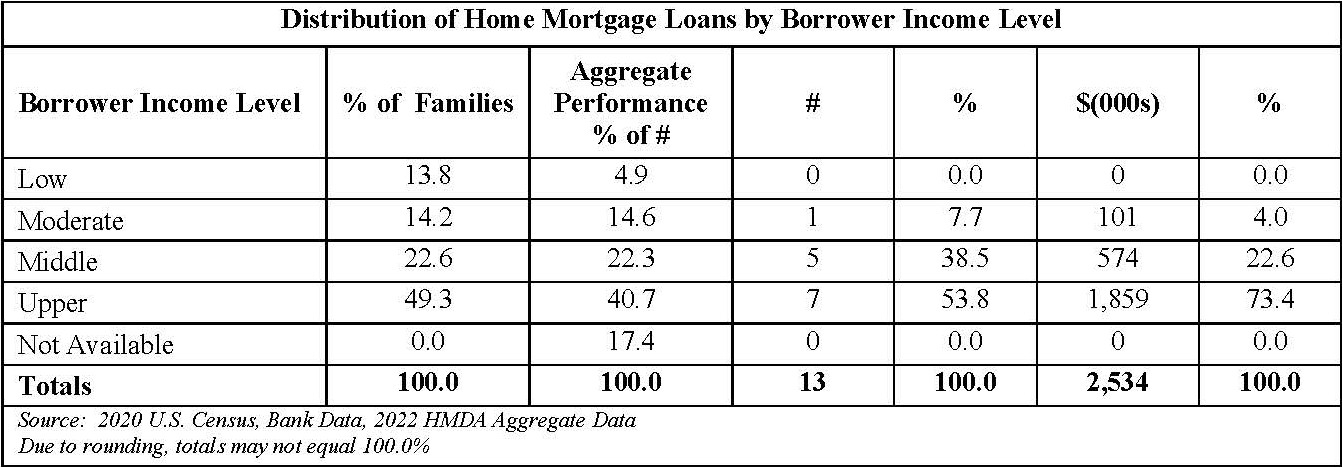
COMMUNITY DEVELOPMENT TEST
The bank originated 59 community development loans totaling $4.8 million in this assessment area. Of the 59 loans, 41 were PPP loans totaling $482,000. All of the community development loans benefiting this area promoted economic development. The Bennington State Bank did not purchase any qualified investments, make any donations, or perform any community development services that benefited the Wamego Assessment Area during the evaluation period.
WICHITA ASSESSMENT AREA - Full-Scope Review
DESCRIPTION OF INSTITUTION'S OPERATIONS IN THE WICHTA ASSESSMENT AREA
The Wichita Assessment Area includes all of Sedgwick County, which is one of the four counties currently in the Wichita, Kansas MSA. The largest city in this assessment area is Wichita (population 395,699 according to 2020 U.S. Census data), where the bank’s sole branch office is
located. The following shows demographic and economic information from the 2020 U.S. Census data and 2022 D&B data for this assessment area.
Economic and Demographic Data
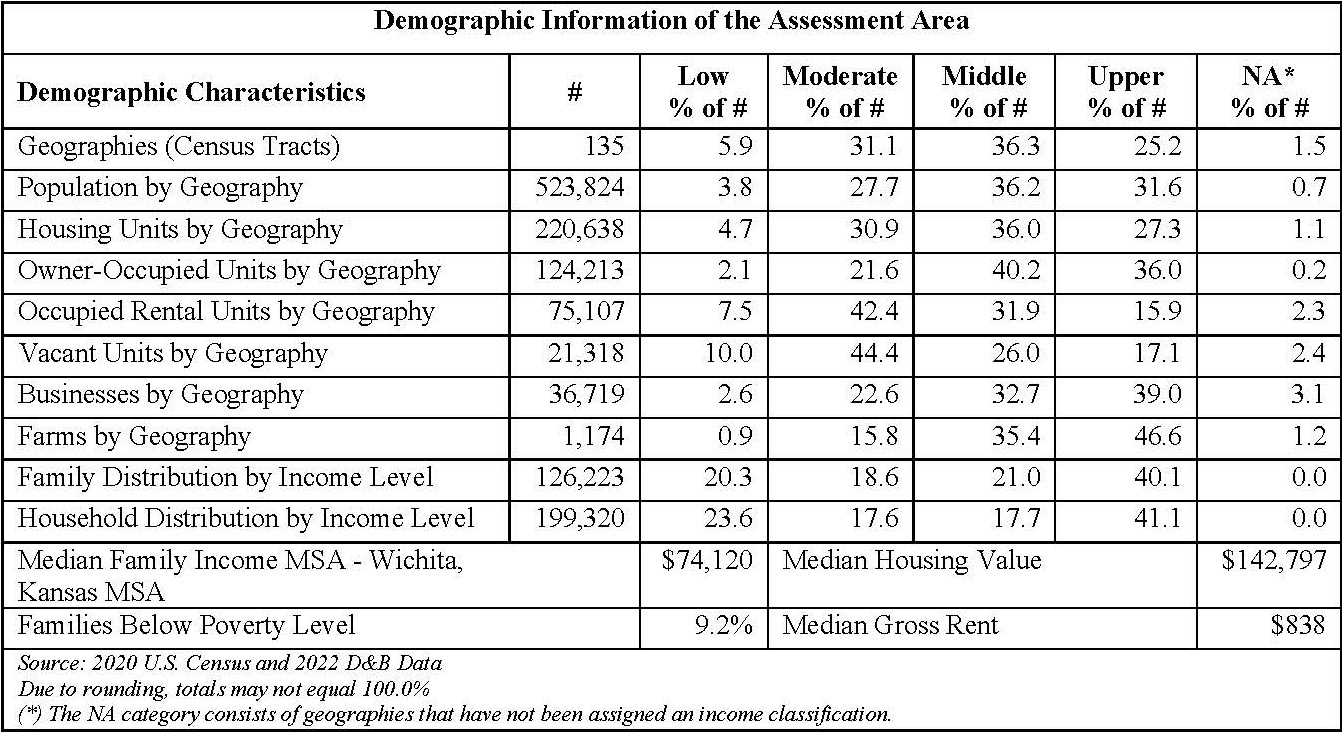
The assessment area consists of 135 census tracts, which includes 8 low-income tracts, 42 moderate-income tracts, 49 middle-income tracts, 34 upper-income tracts, and 2 tracts with no income designation. The following table illustrates select demographic characteristics of the Wichita Assessment Area.
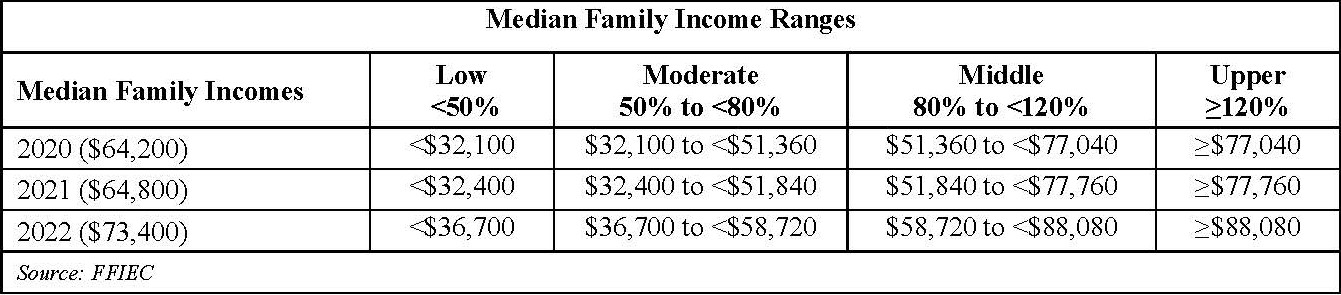
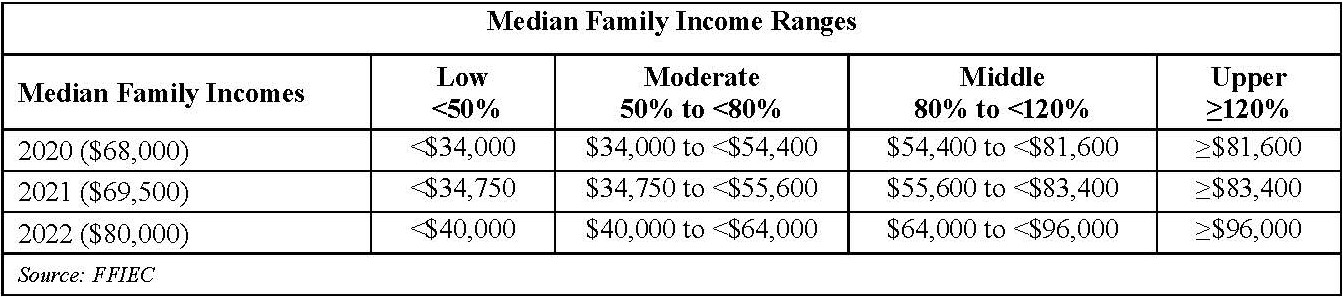
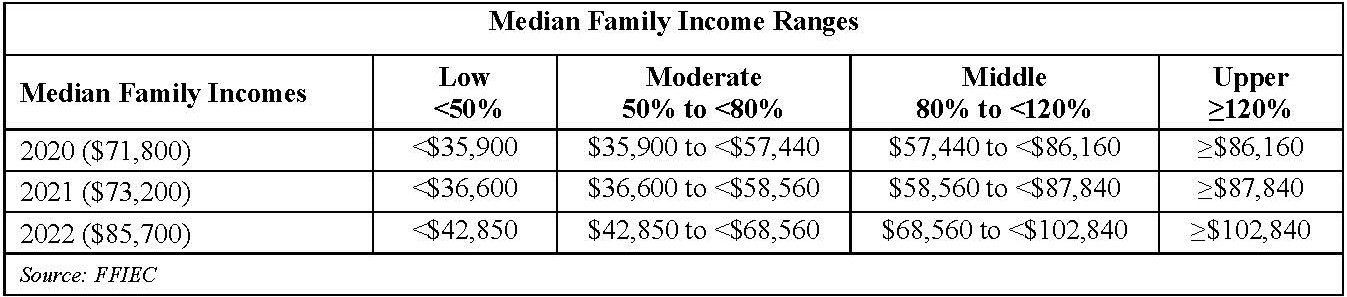
with corresponding low-, moderate-, middle- and upper-income thresholds are presented in the following table.
Competition
The competition for financial services in the assessment area is strong. According to June 30, 2022 FDIC Deposit Market Share data, there are 37 banks operating 157 offices in Sedgwick County. The Bennington State Bank ranked 35th, holding 0.1 percent of the deposit market share. Additionally, the 2022 HMDA aggregate data shows significant competition with 356 lenders originating 15,596 home mortgage loans. The Bennington State Bank ranked 53rd with 0.5 percent of the lending market share.
Community Contact
Examiners may contact community members or other third parties in the assessment area to help gain insight into the area’s economy, demographic trends, and business environment. This information not only helps in identifying credit and community development needs and
opportunities, but also assists in determining whether local financial institutions are responsive to
those needs.
Examiners referenced a recent interview conducted with an individual knowledgeable of the area’s economic conditions and development efforts. The contact indicated that the primary challenges to the area are inflation and labor issues, with many businesses having difficulty getting and retaining quality employees. The contact indicated that competition for banking services in the area is strong, and was not aware of any additional credit-related projects or financing programs that banks should offer. The contact mentioned the primary need is education, specifically education on how to launch a business, how to successfully expand a business, and how to effectively sustain operations. The contact indicated that area financial institutions are actively involved in serving the needs of the area, and was not aware of any unmet credit or community development needs.
Credit and Community Development Needs and Opportunities
Considering demographic and economic data and information provided by the community contact, examiners determined that small business and home mortgage loans represent the primary credit needs in this assessment area. Opportunities exist for originating such loans, as indicated by aggregate data, along with area demographics on the number of small businesses and housing units in the assessment area. Community development needs include affordable housing, community services, economic development, and revitalization/stabilization, as evidenced by the number of small businesses, and low- and moderate-income families and census tracts in this assessment area.
CONCLUSIONS ON PERFORMANCE CRITERIA IN THE WICHITA ASSESSMENT AREA
LENDING TEST
Geographic Distribution
Overall, The Bennington State Bank’s geographic distribution of loans reflects reasonable dispersion throughout the assessment area. Although the home mortgage lending performance was excellent, the bank’s reasonable small business lending performance is the driver for this conclusion.
Small Business Loans
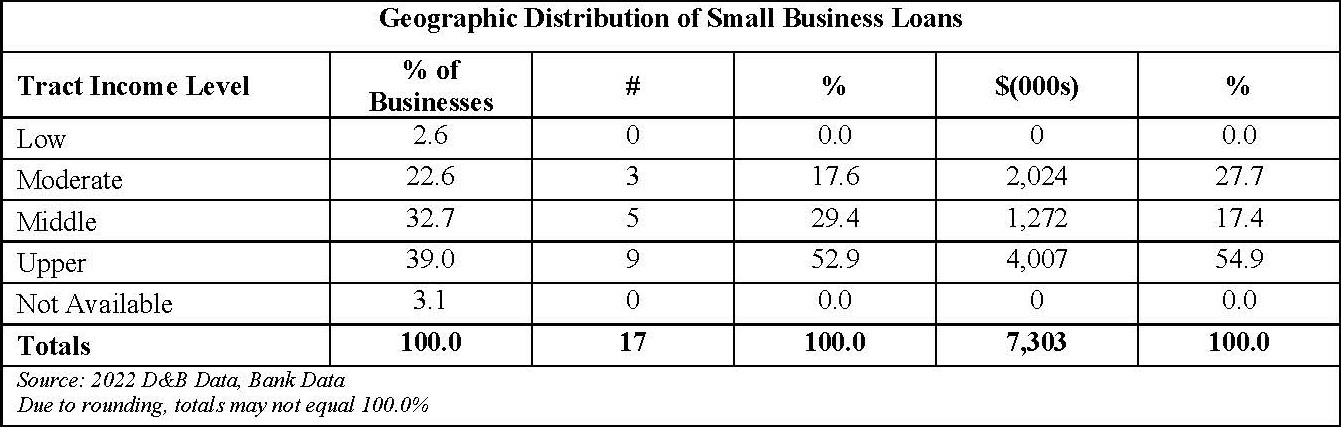
The geographic distribution of small business lending reflects reasonable dispersion throughout the assessment area. As shown in the following table, the bank’s lending performance in the lowincome census tracts lags demographic data; however, the bank’s performance in the moderateincome census tracts is comparable to demographic data. Additionally, the assessment area is new since the prior evaluation as the bank opened the branch in this area just under two years ago. Considering this information, the bank’s performance is reasonable.
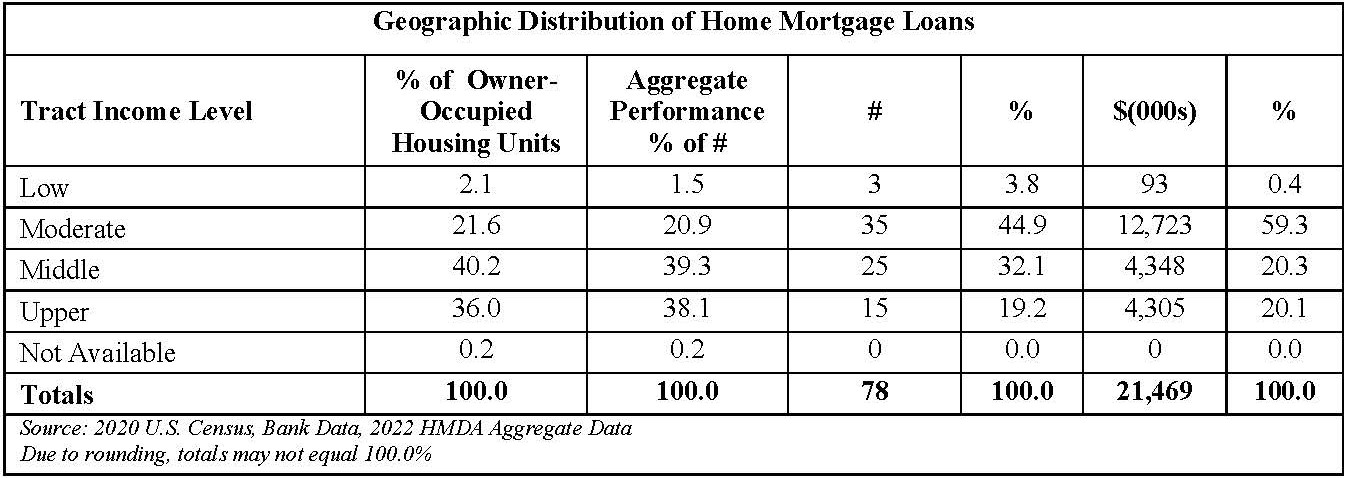
The geographic distribution of home mortgage lending reflects excellent dispersion throughout the assessment area. As shown in the following table, the bank’s lending performance in the low- and moderate-income census tracts exceeds both demographic and aggregate data.
The distribution of borrowers reflects reasonable penetration in the Wichita Assessment Area. This conclusion is supported by the bank’s reasonable small business and home mortgage lending performance.
Small Business Loans
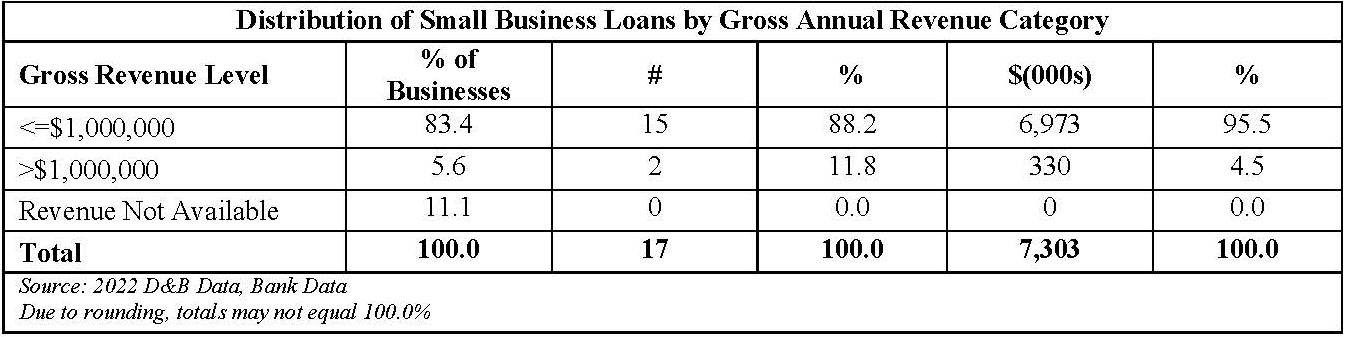
The distribution of loans to businesses of different sizes is reasonable. As shown in the following table, the bank’s level of lending to businesses with revenues of $1 million or less is comparable to demographic data in this revenue category.
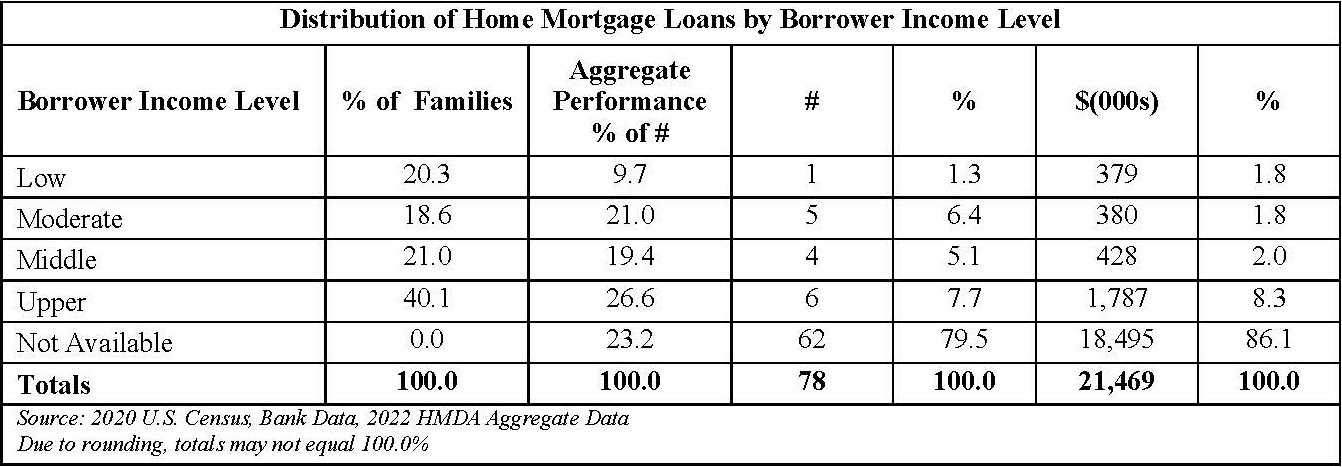
The bank’s record of extending home mortgage loans to borrowers of different income levels is reasonable. As shown in the following table, the bank’s lending performance to low- and moderateincome borrowers notably lags aggregate data; however, there is a significant amount of non-owner occupied loans that do not have reported income. When the non-owner occupied loans are removed from the analysis, the bank’s performance in the low- and moderate-income census tracts is comparable to aggregate data. Considering this factor, the bank’s performance is reasonable. The bank’s performance in 2020 and 2021 lags the performance in 2022, but it is still considered reasonable overall.
COMMUNITY DEVELOPMENT TEST
Community Development Loans
The bank originated 8 community development loans totaling $7.5 million in this assessment area. The majority of the lending helped to stabilize low- and moderate-income census tracts by providing necessary financing to businesses operating and providing employment opportunities in such tracts.
Qualified Investments
The Bennington State Bank made 3 qualified investments totaling $783,701 in the Wichita Assessment Area. For 1 such investment, the bank participated in a bond in which the proceeds supported various infrastructure improvement projects in moderate-income census tracts throughout the area.
Community Development Services
The Bennington State Bank did not perform any community development services that benefited the Wichita Assessment Area during the evaluation period.
APPENDICES
INTERMEDIATE SMALL BANK PERFORMANCE CRITERIA
The Lending Test evaluates the bank’s record of helping to meet the credit needs of its assessment
area(s) by considering the following criteria:
- The bank’s loan-to-deposit ratio, adjusted for seasonal variation, and, as appropriate, other lending-related activities, such as loan originations for sale to the secondary markets, community development loans, or qualified investments;
- The percentage of loans, and as appropriate, other lending-related activities located in the bank’s assessment area(s);
- The geographic distribution of the bank’s loans;
- The bank’s record of lending to and, as appropriate, engaging in other lending-related activities for borrowers of different income levels and businesses and farms of different sizes; and
- The bank’s record of taking action, if warranted, in response to written complaints about its performance in helping to meet credit needs in its assessment area(s).
Community Development Test
The Community Development Test considers the following criteria:
- The number and amount of community development loans;
- The number and amount of qualified investments;
- The extent to which the bank provides community development services; and
- The bank’s responsiveness through such activities to community development lending, investment, and service needs.
GLOSSARY
American Community Survey (ACS): A nationwide United States Census survey that produces demographic, social, housing, and economic estimates in the form of five year estimates based on population thresholds.
Area Median Income: The median family income for the MSA, if a person or geography is located in an MSA; or the statewide nonmetropolitan median family income, if a person or geography is located outside an MSA.
Assessment Area: A geographic area delineated by the bank under the requirements of the Community Reinvestment Act.
Census Tract: A small, relatively permanent statistical subdivision of a county or equivalent entity. The primary purpose of census tracts is to provide a stable set of geographic units for the presentation of statistical data. Census tracts generally have a population size between 1,200 and 8,000 people, with an optimum size of 4,000 people. Census tract boundaries generally follow visible and identifiable features, but they may follow nonvisible legal boundaries in some instances. State and county boundaries always are census tract boundaries.
Combined Statistical Area (CSA): A combination of several adjacent metropolitan statistical areas or micropolitan statistical areas or a mix of the two, which are linked by economic ties.
Community Development: For loans, investments, and services to qualify as community development activities, their primary purpose must:
- Support affordable housing for low- and moderate-income individuals;
- Target community services toward low- and moderate-income individuals;
- Promote economic development by financing small businesses or farms; or
- Provide activities that revitalize or stabilize low- and moderate-income geographies, designated disaster areas, or distressed or underserved nonmetropolitan middle-income geographies.
- Community Development
Corporation (CDC): A CDC allows banks and holding companies to make equity type of investments in community development projects. Institution CDCs can develop innovative debt instruments or provide near-equity investments tailored to the development needs of the community. Institution CDCs are also tailored to their financial and marketing needs. A CDC may purchase, own, rehabilitate, construct, manage, and sell real property. Also, it may make equity or debt investments in development projects and in local businesses. The CDC activities are expected to directly benefit low- and moderate-income groups, and the investment dollars should not represent an undue risk on the banking organization.
Community Development Financial Institutions (CDFIs): CDFIs are private intermediaries (either for profit or nonprofit) with community development as their primary mission. A CDFI facilitates the flow of lending and investment capital into distressed communities and to individuals who have been unable to take advantage of the services offered by traditional financial institutions. Some basic types of CDFIs include community development banks, community development loan funds, community development credit unions, micro enterprise funds, and community development venture capital funds.
A certified CDFI must meet eligibility requirements. These requirements include the following:
- Having a primary mission of promoting community development;
- Serving an investment area or target population;
- Providing development services;
- Maintaining accountability to residents of its investment area or targeted population through representation on its governing board of directors, or by other means;
- Not constituting an agency or instrumentality of the United States, of any state or political subdivision of a state.
Community Development Loan: A loan that:
- Has as its primary purpose community development; and
- Except in the case of a wholesale or limited purpose institution:
- Has not been reported or collected by the institution or an affiliate for consideration in the institution’s assessment area as a home mortgage, small business, small farm, or consumer loan, unless it is a multifamily dwelling loan (as described in Appendix A to Part 203 of this title); and
- Benefits the institution’s assessment area(s) or a broader statewide or regional area including the institution’s assessment area(s).
Community Development Service: A service that:
- Has as its primary purpose community development;
- Is related to the provision of financial services; and
- Has not been considered in the evaluation of the institution’s retail banking services under § 345.24(d).
Consumer Loan(s): A loan(s) to one or more individuals for household, family, or other personal expenditures. A consumer loan does not include a home mortgage, small business, or small farm loan. This definition includes the following categories: motor vehicle loans, credit card loans, home equity loans, other secured consumer loans, and other unsecured consumer loans.
Core Based Statistical Area (CBSA): The county or counties or equivalent entities associated with at least one core (urbanized area or urban cluster) of at least 10,000 population, plus adjacent counties having a high degree of social and economic integration with the core as measured through commuting ties with the counties associated with the core. Metropolitan and Micropolitan Statistical Areas are the two categories of CBSAs.
Distressed Middle-Income Nonmetropolitan Geographies: A nonmetropolitan middle-income geography will be designated as distressed if it is in a county that meets one or more of the following triggers:
- An unemployment rate of at least 1.5 times the national average;
- A poverty rate of 20 percent or more; or
- A population loss of 10 percent or more between the previous and most recent decennial census or a net migration loss of 5 percent or more over the 5-year period preceding the most recent census.
Family: Includes a householder and one or more other persons living in the same household who are related to the householder by birth, marriage, or adoption. The number of family households always equals the number of families; however, a family household may also include non-relatives living with the family. Families are classified by type as either a married-couple family or other family. Other family is further classified into “male householder” (a family with a male householder and no wife present) or “female householder” (a family with a female householder and no husband present).
FFIEC-Estimated Income Data: The Federal Financial Institutions Examination Council (FFIEC) issues annual estimates which update median family income from the metropolitan and nonmetropolitan areas. The FFIEC uses American Community Survey data and factors in information from other sources to arrive at an annual estimate that more closely reflects current economic conditions.
Full-Scope Review: A full-scope review is accomplished when examiners complete all applicable interagency examination procedures for an assessment area. Performance under applicable tests is analyzed considering performance context, quantitative factors (e.g, geographic distribution, borrower profile, and total number and dollar amount of investments), and qualitative factors (e.g, innovativeness, complexity, and responsiveness).
Geography: A census tract delineated by the United States Bureau of the Census in the most recent decennial census.
Home Mortgage Disclosure Act (HMDA): The statute that requires certain mortgage lenders that do business or have banking offices in a metropolitan statistical area to file annual summary reports of their mortgage lending activity. The reports include such data as the race, gender, and the income of applicants; the amount of loan requested; and the disposition of the application (approved, denied, and withdrawn).
Home Mortgage Loans: Includes closed-end mortgage loans or open-end line of credits as defined in the HMDA regulation that are not an excluded transaction per the HMDA regulation.
Housing Unit: Includes a house, an apartment, a mobile home, a group of rooms, or a single room that is occupied as separate living quarters.
Limited-Scope Review: A limited scope review is accomplished when examiners do not complete all applicable interagency examination procedures for an assessment area. Performance under applicable tests is often analyzed using only quantitative factors (e.g, geographic
distribution, borrower profile, total number and dollar amount of investments, and branch distribution).
Low-Income: Individual income that is less than 50 percent of the area median income, or a median family income that is less than 50 percent in the case of a geography.
Low Income Housing Tax Credit: The Low-Income Housing Tax Credit Program is a housing program contained within the Internal Revenue Code of 1986, as amended. It is administered by the U.S. Department of the Treasury and the Internal Revenue Service. The U.S. Treasury
Department distributes low-income housing tax credits to housing credit agencies through the Internal Revenue Service. The housing agencies allocate tax credits on a competitive basis.
Developers who acquire, rehabilitate, or construct low-income rental housing may keep their tax credits. Or, they may sell them to corporations or investor groups, who, as owners of these properties, will be able to reduce their own federal tax payments. The credit can be claimed annually for ten consecutive years. For a project to be eligible, the developer must set aside a specific percentage of units for occupancy by low-income residents. The set-aside requirement remains throughout the compliance period, usually 30 years.
Market Share: The number of loans originated and purchased by the institution as a percentage of the aggregate number of loans originated and purchased by all reporting lenders in the metropolitan area/assessment area.
Median Income: The median income divides the income distribution into two equal parts, one having incomes above the median and other having incomes below the median.
Metropolitan Division (MD): A county or group of counties within a CBSA that contain(s) an urbanized area with a population of at least 2.5 million. A MD is one or more main/secondary counties representing an employment center or centers, plus adjacent counties associated with the main/secondary county or counties through commuting ties.
Metropolitan Statistical Area (MSA): CBSA associated with at least one urbanized area having a population of at least 50,000. The MSA comprises the central county or counties or equivalent entities containing the core, plus adjacent outlying counties having a high degree of social and economic integration with the central county or counties as measured through commuting.
Middle-Income: Individual income that is at least 80 percent and less than 120 percent of the area median income, or a median family income that is at least 80 and less than 120 percent in the case of a geography.
Moderate-Income: Individual income that is at least 50 percent and less than 80 percent of the area median income, or a median family income that is at least 50 and less than 80 percent in the case of a geography.
Multi-family: Refers to a residential structure that contains five or more units.
Nonmetropolitan Area (also known as non-MSA): All areas outside of metropolitan areas. The definition of nonmetropolitan area is not consistent with the definition of rural areas. Urban and rural classifications cut across the other hierarchies. For example, there is generally urban and rural territory within metropolitan and nonmetropolitan areas.
Owner-Occupied Units: Includes units occupied by the owner or co-owner, even if the unit has not been fully paid for or is mortgaged.
Qualified Investment: A lawful investment, deposit, membership share, or grant that has as its primary purpose community development.
Rated Area: A rated area is a state or multistate metropolitan area. For an institution with domestic branches in only one state, the institution’s CRA rating would be the state rating. If an institution maintains domestic branches in more than one state, the institution will receive a rating for each state in which those branches are located. If an institution maintains domestic branches in two or more states within a multistate metropolitan area, the institution will receive a rating for the multistate metropolitan area.
Rural Area: Territories, populations, and housing units that are not classified as urban.
Small Business Investment Company (SBIC): SBICs are privately-owned investment companies which are licensed and regulated by the Small Business Administration (SBA). SBICs provide long-term loans and/or venture capital to small firms. Because money for venture or risk investments is difficult for small firms to obtain, SBA provides assistance to SBICs to stimulate and supplement the flow of private equity and long-term loan funds to small companies. Venture capitalists participate in the SBIC program to supplement their own private capital with funds borrowed at favorable rates through SBA’s guarantee of SBIC debentures. These SBIC debentures are then sold to private investors. An SBIC’s success is linked to the growth and profitability of the companies that it finances. Therefore, some SBICs primarily assist businesses with significant growth potential, such as new firms in innovative industries. SBICs finance small firms by providing straight loans and/or equity-type investments. This kind of financing gives them partial ownership of those businesses and the possibility of sharing in the companies’ profits as they grow and prosper.
Small Business Loan: A loan included in “loans to small businesses” as defined in the Consolidated Report of Condition and Income (Call Report). These loans have original amounts of $1 million or less and are either secured by nonfarm nonresidential properties or are classified as commercial and industrial loans.
Small Farm Loan: A loan included in “loans to small farms” as defined in the instructions for preparation of the Consolidated Report of Condition and Income (Call Report). These loans have original amounts of $500,000 or less and are either secured by farmland, including farm residential and other improvements, or are classified as loans to finance agricultural production and other loans to farmers.
Underserved Middle-Income Nonmetropolitan Geographies: A nonmetropolitan middleincome geography will be designated as underserved if it meets criteria for population size, density, and dispersion indicating the area’s population is sufficiently small, thin, and distant from a
population center that the tract is likely to have difficulty financing the fixed costs of meeting essential community needs.
Upper-Income: Individual income that is 120 percent or more of the area median income, or a median family income that is 120 percent or more in the case of a geography.
Urban Area: All territories, populations, and housing units in urbanized areas and in places of 2,500 or more persons outside urbanized areas. More specifically, “urban” consists of territory, persons, and housing units in places of 2,500 or more persons incorporated as cities, villages, boroughs (except in Alaska and New York), and towns (except in the New England states, New York, and Wisconsin).
“Urban” excludes the rural portions of “extended cities”; census designated place of 2,500 or more persons; and other territory, incorporated or unincorporated, including in urbanized areas.
Products & Services
Consumer Deposit Products
- No monthly service fee or minimum monthly balance
- $100 minimum opening balance
- BSB Visa Debit Card is provided without a fee to personal checking account holders
- Online & Mobile banking is available to account holders subject to approval. You may also sign up for Online Bill Pay to easily pay bills and expenses
- You will receive a paper statement each month unless you sign up for electronic paperless E-statements. Electronic statements require a valid E-mail address
- This is a NON-interest bearing account
- No transaction limits on this account
- Access to 3 deals with local merchants with BaZing
Silver Checking
- This account requires a $6.00 monthly service fee
- $100 minimum opening balance
- This is a NON-interest bearing account
- BSB Visa Debit Card is provided without a fee to personal checking account holders
- Online & Mobile banking is available to account holders subject to approval. You may also sign up for Online Bill Pay to easily pay bills and expenses
- You will receive a paper statement each month unless you sign up for electronic paperless E-statements. Electronic statements require only a valid E-mail address
- No transaction limits on this account
- Added account features:
- BaZing Savings
- Cell Phone Protection
- Identity Theft Protection
- Roadside Assistance
- $10,000 Travel Accidental Death Coverage
- Pharmacy, Vision, and Hearing Savings
Gold Checking
- This account requires a $500 minimum monthly balance to avoid an $8.00 monthly service charge
- Interest bearing account
- $100 minimum opening balance
- BSB Visa Debit Card is provided without a fee to personal checking account holders
- Online & Mobile banking is available to account holders subject to approval. You may also sign up for Online Bill Pay to easily pay bills and expenses
- You will receive a paper statement each month unless you sign up for electronic paperless E-statements. Electronic statements require only a valid E-mail address.
- This is an interest-bearing checking account. Your account will earn the disclosed annual percentage yield on the full amount of principal at all times. At our discretion, we may change this rate at any time. No transaction limits on this account
- Current Rates will be provided upon request
- Added account features:
- BaZing Savings
- Cell Phone Protection
- Identity Theft Protection
- Roadside Assistance
- $10,000 Travel Accidental Death Coverage
- Pharmacy, Vision, and Hearing Savings
Money Market Account
- This account requires a $2,500 minimum monthly balance to avoid a $10.00 monthly service charge
- Interest bearing account
- $2,500 minimum opening balance
- Interest accrues based on 2 tiers: (1) up to $24,999.99 and (2) $25,000 and up. Your account will earn the disclosed annual percentage yield on the full amount of principal at all times. At our discretion, we may change this rate at any time
- Current Rates will be provided upon request
- You will receive a paper statement each month unless you sign up for electronic paperless E-statements. Electronic statements require only a valid E-mail address
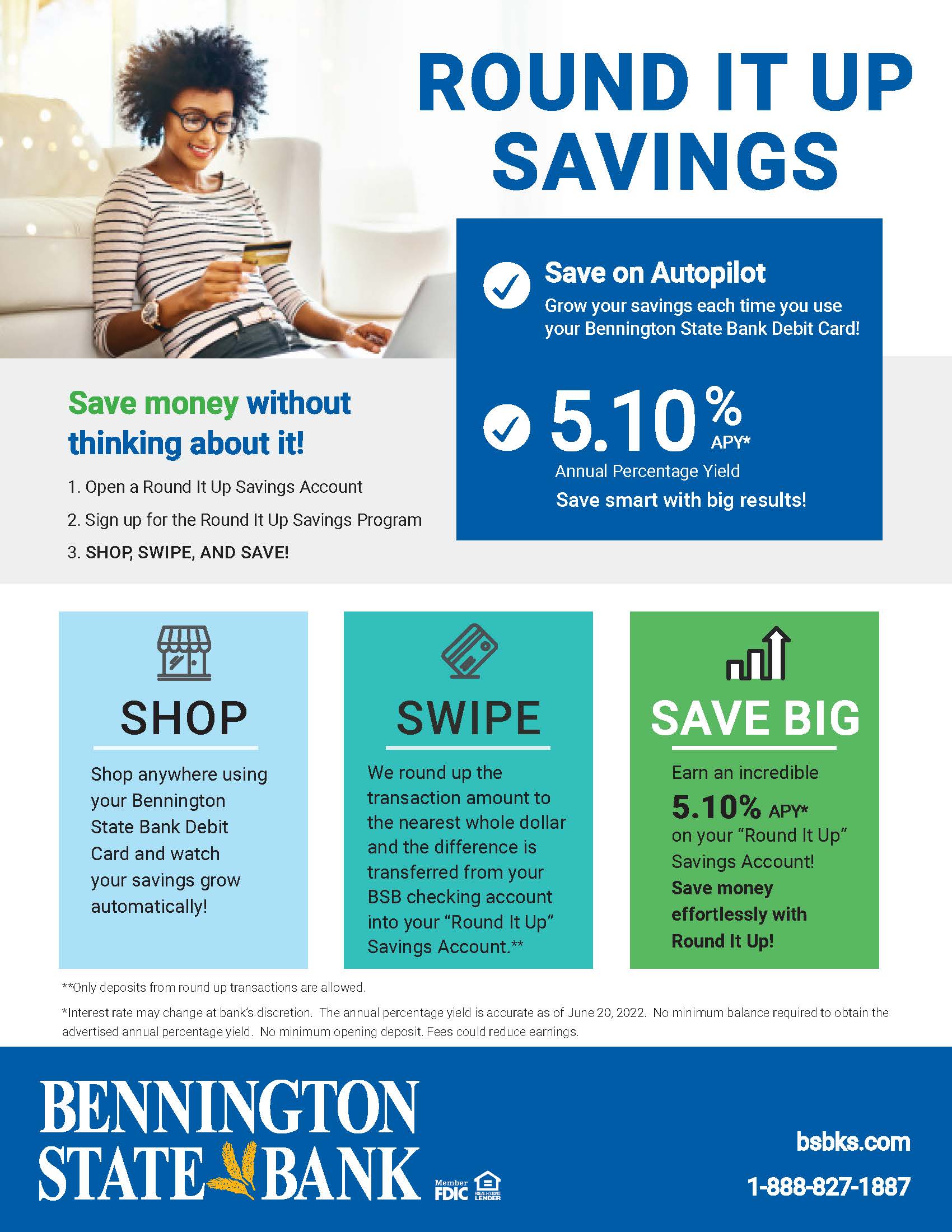
Savings Accounts
- $50 minimum opening balance
- Online & Mobile banking is available to account holders subject to approval. You may also sign up for Online Bill Pay to easily pay bills and expenses
- Interest-bearing account. You must maintain $100 balance to obtain disclosed annual percentage yield. At our discretion, we may change this rate at any time
- You will be mailed a paper account statement quarterly unless you have electronic transactions, if so you will receive your statements monthly. You can also sign up for electronic paperless E-statements. Electronic statements require only a valid E-mail address
- Current Rates will be provided upon request.
Christmas Club Savings
- $50 minimum opening balance
- Max balance allowed is $249,999.99
- Monthly automatic deposit of at least $25.00 required
- Combined statement required with automatic transfer account
- Interest-bearing account. You must maintain $100 balance to obtain disclosed annual percentage yield. At our discretion, we may change this rate at any time
- Annual disbursement to automatic transfer account will begin November 6, of current year and continue annually thereafter until account is closed
- Current Rates will be provided upon request.
Other Deposit Accounts
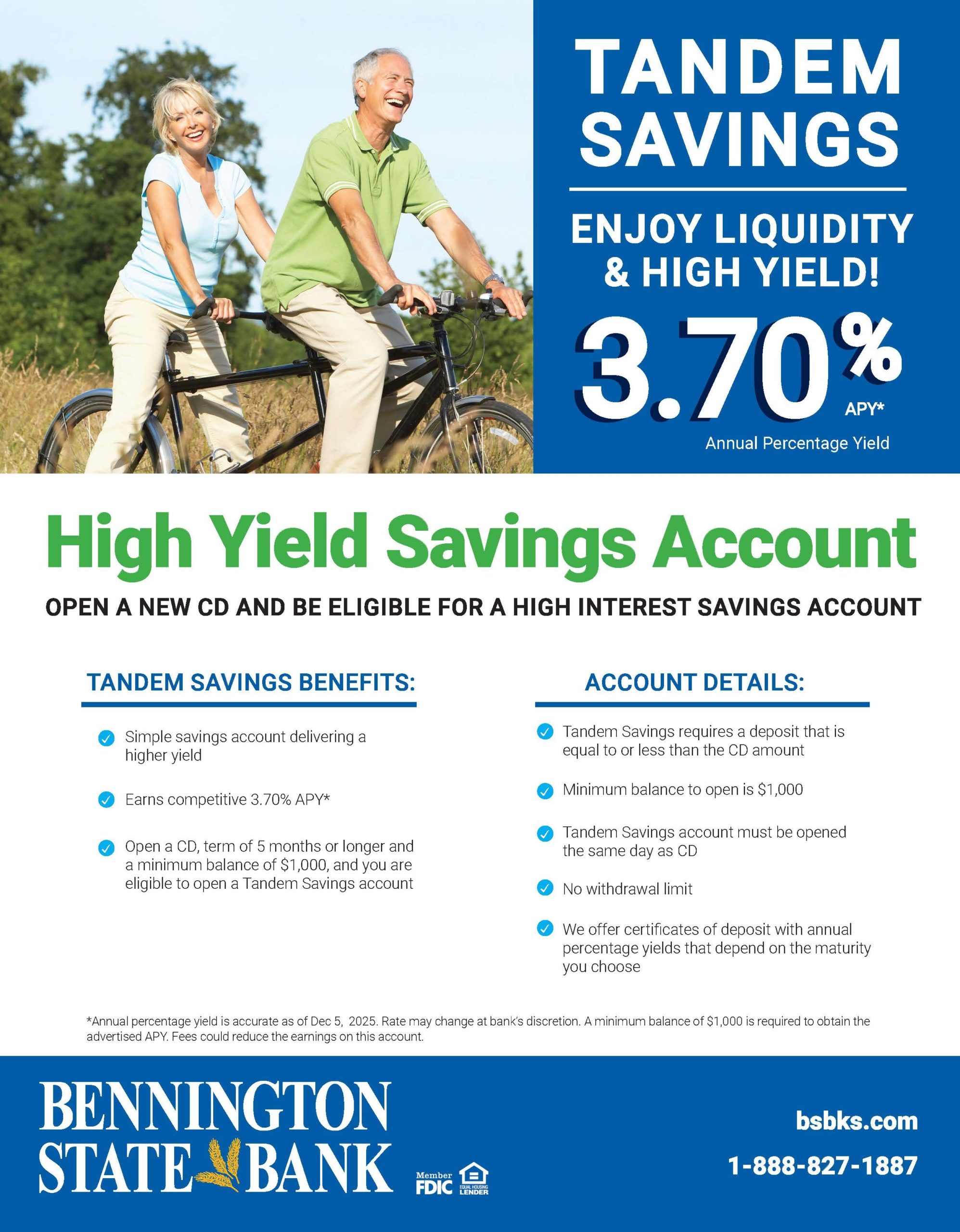
- Certificates of Deposit
- Health Savings Accounts (Checking and Money Market)
- Individual Retirement Accounts
- Traditional IRA
- Roth IRA
Business Deposit Products
Small Business Checking
Designed for businesses with low to moderate transaction activity
- $100 minimum opening deposit
- $10 maintenance fee per statement cycle if the average daily balance for the cycle falls below $750
- 100 free paper items per month, $.15 per item over 100
- Free eStatements
- $5 per month for paper statements
Regular Business Checking
- $100 minimum opening deposit
- $10 monthly maintenance fee
- $.10 per paper debit item
- $.05 per paper deposit item
- .25% earnings credit on investable balance
Business Savings Account
- No monthly maintenance fee for $50 minimum balance
- $6 semi-annual maintenance fee when average daily balance falls below $50
- Unlimited deposits and withdrawals
- Competitive discretionary interest rate
Additional Business Services
- ACH Origination $25 monthly fee – Same day ACH $10 additional monthly fee
- Wire transfer – Incoming: Domestic $10; International $25
- Wire transfer – Outgoing: Domestic $20; International $52.50
- Positive Pay – no cost
- Business debit card
- Sweep – $25 monthly fee
- Repurchase Agreements available upon request
- Remote deposit capture – $25 monthly maintenance fee, additional equipment fees may apply
- Lockbox
- Merchant Services
Other Services
- ATMs
- Cash Advance
- Credit Life and A&H Insurance
- Debit Cards
- Internet Banking
- Internet Bill Pay
- Apple/Android Application
- Loan Escrow for Taxes and Insurance
- Mobile Banking
- Monetary Instruments
- Night Deposit
- Redeem Savings Bonds
- Safe Deposit Box
- Telephone Banking
- VISA Gift Cards
- Wire Transfers
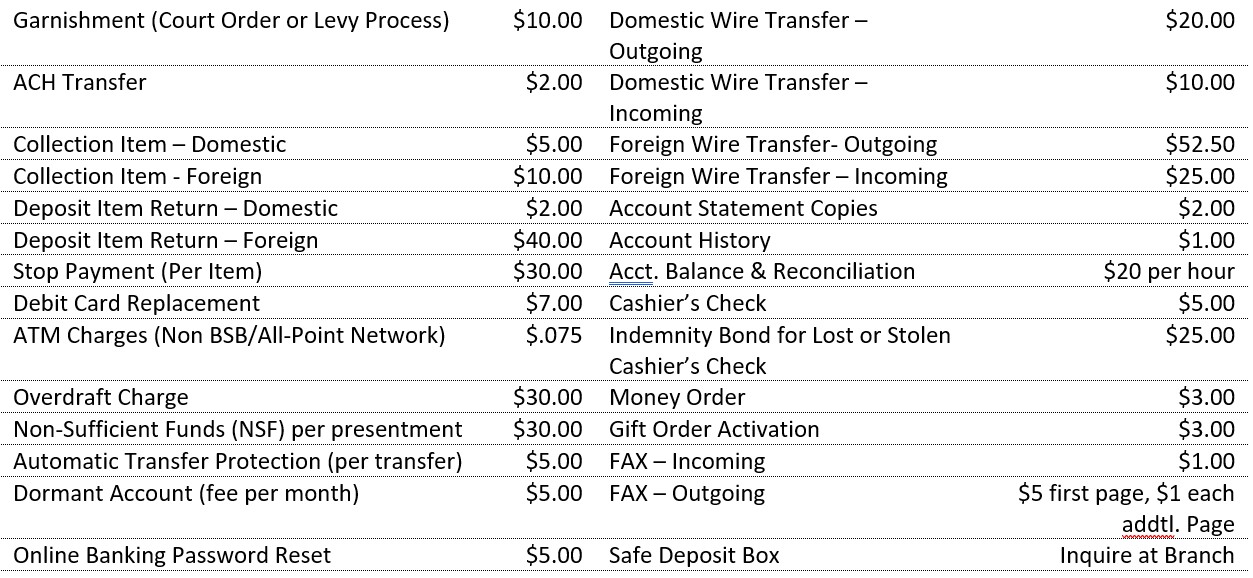
Other Fees
Loan Products
Commercial Loans
- Accounts Receivable
- Floor Plan
- Inventory
- Machinery & Equipment
- Operating
Consumer Loans
- Debt Consolidation
- Personal
- Vehicle/Recreational
Real Estate Loans
- Agriculture
- Commercial
- Residential Dwelling
- Construction
- Home Equity Line of Credit
- Multi-Family Dwelling
- Investment Property
- Secondary Market
- Conventional
- FHA
- Veteran Affairs
- Rural Developmen
Agricultural Loans
- Crop
- Livestock
- Machinery & Equipment
- Operating
Additional Loan Programs Offered
- Farm Service Agency (FSA)
- Small Business Administration (SBA)
- FHLB Affordable Housing Program
- FHLB Rural First Time Home Buyer Program
- Other FHLB Grants
- BSB Affordable Housing
BSB Trust & Wealth Management
- NOT FDIC INSURED, NOT DEPOSITS OF THE BANK, NOT GUARANTEED, are subject to investment risks, including the possible loss of principal invested.
- Personalized investment and management plans to fit each customer’s specific needs and goals including:
- Investment Management
- Employee Benefit Plans
- Individual Retirement Accounts (IRA)
- Custodial Accounts
- Trust Administration
- Estate Planning & Settlement
- Retirement Planning